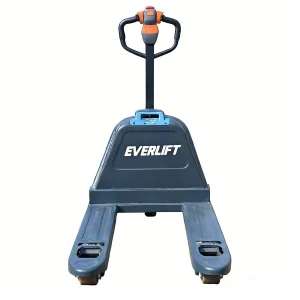
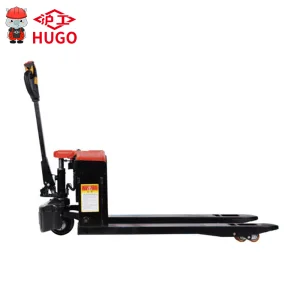
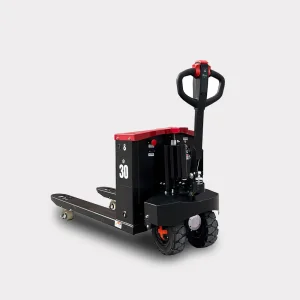
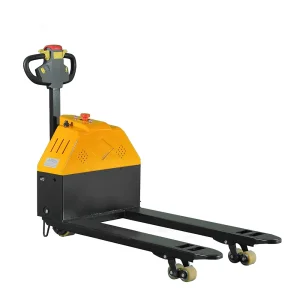
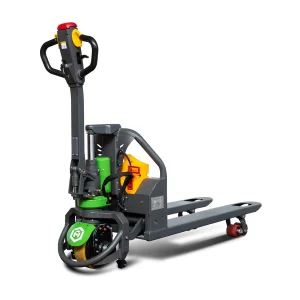
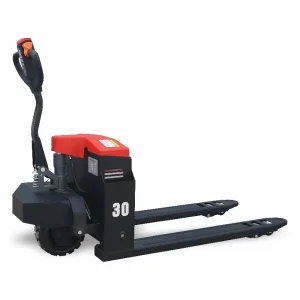
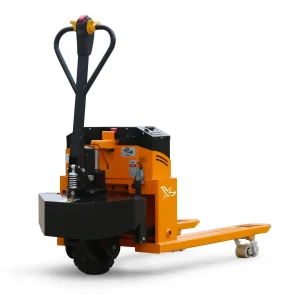
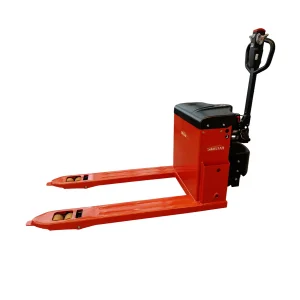
A focused first look at four configurations frequently evaluated for Novosibirsk warehousing, cold-chain, rough-yard, and standard indoor operations. All product links below are preserved from the original product range.
A practical decision framework for buyers comparing electric pallet jack suppliers, not just equipment prices. The numbers below reflect the key evaluation dimensions used in this white paper.
Novosibirsk is not a generic Russian city market. It is the administrative, industrial, scientific, and logistics center of Siberia, positioned on the Trans-Siberian Railway and connected to federal highway corridors that link European Russia, Siberia, the Russian Far East, Kazakhstan, Mongolia, and China. For warehouse operators, grocery and pharmaceutical distributors, e-commerce fulfillment centers, manufacturers, and construction suppliers, the electric pallet jack has shifted from a simple lifting device to a critical node in throughput, safety, energy cost, and service continuity.
Semantic search engines now understand that someone searching for an electric pallet jack manufacturer in Novosibirsk may actually need a cold-weather configuration, EAEU compliance documentation, a spare-parts plan, and a supplier who can support a multi-year duty cycle. Intent mining reveals three recurring clusters: transactional supplier intent, specification intent around capacity and temperature, and compliance/service intent around certification, manuals, and after-sales response. A catalogue page alone cannot satisfy those clusters. A manufacturer must provide engineering evidence and decision support.
This white paper is written for procurement teams, operations directors, and technical buyers who need more than a product list. It explains how global purchasing intent is changing, how the Novosibirsk climate and compliance environment affect specification, how different industries should map equipment to applications, and how a manufacturer with E-E-A-T depth—demonstrated experience, engineering expertise, authority in material handling, and reliable after-sales support—can reduce total cost of ownership.
The central question is not “Which pallet jack is cheapest?” but “Which electric pallet jack configuration will remain productive, compliant, and serviceable across a Novosibirsk winter and a multi-year duty cycle?” That question is the basis for information gain: content that helps a buyer make a better decision, not just browse a product page.
The Novosibirsk market combines a continental climate, a dense network of wholesale and retail distribution, and a growing e-commerce fulfillment footprint. Winter temperatures can fall below -30°C, and rapid temperature swings affect battery capacity, hydraulic oil viscosity, seals, display screens, and operator comfort. A pallet jack that performs well in a heated warehouse in another region may experience reduced runtime, slower lift, or brittle components in an unheated Siberian cross-dock.
Novosibirsk is also a major rail and road hub. Its logistics operators handle freight moving between European Russia, Siberia, the Russian Far East, Kazakhstan, Mongolia, and China. That role creates demand for electric pallet trucks that can move goods from rail containers to warehouse racking, from cold storage to retail replenishment, and from indoor floors to outdoor yards. The buyer mix includes third-party logistics providers, grocery chains, pharmaceutical distributors, building-materials traders, machinery manufacturers, and food processors.
Novosibirsk sits on the Trans-Siberian Railway and major federal highway corridors. Electric pallet jacks must support fast container unloading, cross-docking, and multi-shift operations where downtime is highly visible.
Specify cold-weather battery packages, low-viscosity hydraulic oil, heated operator grips where needed, and condensation protection. For -30°C environments, lithium iron phosphate with self-heating or optimized lead-acid charging is often evaluated.
Urban fulfillment centers require compact walkie pallet jacks, 1.5–2.0 t capacity, 1150 mm forks, and opportunity charging to match shift patterns and limited charging windows.
Food distribution and cold storage operators need corrosion-resistant models, reliable braking, and battery solutions that tolerate freezer-to-dock transitions without unexpected shutdowns.
Outdoor yards, rough surfaces, and heavy loads push buyers toward rough-terrain 3 t models, while workshops prefer 1.5–2.0 t electric pallet trucks with high maneuverability and reinforced forks.
Operators need low-effort steering, clear visibility, emergency reverse, and stable braking. Safety is both a compliance issue and a productivity issue in tight labor markets.
Local search intent in Novosibirsk often includes phrases such as “electric pallet jack manufacturer Novosibirsk”, “electric pallet truck supplier Siberia”, “lithium pallet jack cold storage”, and “EAEU compliant pallet jack”. The intent behind these searches is rarely just product discovery. Buyers are comparing delivery terms, spare parts, certification, and winter performance.
Across Europe, Central Asia, and the Asia-Pacific, enterprise buyers are standardizing material handling fleets around safety, energy, and data. The global electric pallet truck market is being shaped by electrification, lithium battery adoption, e-commerce fulfillment, labor shortages, and stricter emissions and safety rules. For Novosibirsk buyers, global procurement standards are relevant because local operations compete for capital within multinational groups and because cross-border projects often require documentation, spare-parts planning, and lifecycle cost transparency.
Energy, maintenance, battery replacement, downtime, and residual value now outweigh the initial purchase price in most fleet decisions. A lower-priced unit with poor cold-weather performance can become the most expensive option.
Emergency reverse, dead-man braking, hill-hold, visibility, and low steering effort are evaluated as standard productivity features, not optional extras.
Lead-acid versus lithium, opportunity charging, cold-weather charging, and peak demand all affect fleet design. Charging infrastructure should be planned before the first unit arrives.
CAN bus, battery monitoring, utilization data, maintenance alerts, RFID, and scale options are increasingly requested by multi-site operators that need fleet visibility.
EAEU technical regulations, Russian manuals, labeling, customs classification, warranty terms, and spare-parts lists must be aligned before shipment.
Response time, critical spares, remote diagnostics, and operator training determine whether a fleet remains productive after the warranty period begins.
Illustrative decision weighting for multi-shift Novosibirsk operations. It is not a universal benchmark; project-specific weighting should be agreed with operations, finance, and compliance teams.
User intent mining for this category is unusually revealing. Transactional queries ask for a supplier; specification queries ask for capacity, fork length, battery chemistry, and temperature limits; compliance queries ask for EAEU documents, Russian manuals, and spare-parts support. A manufacturer that answers all three clusters with verifiable engineering evidence creates information gain—the missing layer that helps procurement committees move from comparison to decision.
The right solution is a configuration, not a single model. The following application map helps buyers align capacity, fork length, battery chemistry, wheel type, and safety features with real operating conditions.
For -18°C to -30°C storage, consider lithium with self-heating, low-temperature hydraulic fluid, heated grips, and condensation management. Use 1.5–2.0 t walkie models for low-level picking and 3 t rough-terrain units for outdoor dock transitions.
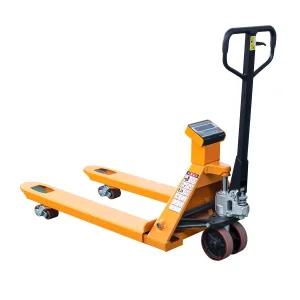
Multi-shift parcel hubs need fast opportunity charging, compact chassis, 1150 mm forks, and easy battery access. Scale-equipped pallet jacks can capture weight data at receiving and reduce downstream rework.
High-frequency replenishment favors 1.5 t electric pallet trucks with smooth acceleration, low noise, and precise low-speed control. Operator training and aisle management reduce rack damage and product loss.
Heavy coils, pallets, and machine-fed materials require reinforced forks, stable braking, and debris-resistant wheels. 2.0–3.0 t models and scale options support production control and load verification.
Outdoor yards, gravel, snow, and uneven surfaces demand rough-terrain 3 t electric pallet jacks with lugged wheels, higher ground clearance, and sealed electricals for reliable operation.
Washdown environments need corrosion protection, IP-rated components where appropriate, and hygienic design. Battery charging areas should be separated from open food zones to control contamination risk.
Electric pallet jack technology is moving along four lines: energy density, cold-weather reliability, digital connectivity, and automation readiness. A procurement decision made in 2025 should anticipate the next five years of battery, safety, and fleet-management changes.
LFP batteries, opportunity charging, and battery management systems reduce charging downtime. In Novosibirsk, specify low-temperature charging limits and self-heating options for unheated warehouses.
CAN-bus data, battery state-of-health, fault codes, and utilization reports enable remote diagnostics and spare-parts planning. Buyers should require data ownership and export capability.
Pallet jacks will increasingly interface with AMRs, warehouse execution systems, and digital twins. Standardized interfaces, safe sensors, and clear operating zones will matter more than isolated hardware features.
Second-life batteries, modular components, recyclable materials, and remanufacturing will influence TCO. Suppliers with design-for-service and documented spare-parts strategies will have an advantage.
The most likely near-term winner is not a radical new fuel, but a tightly integrated electric system: LFP battery + self-heating + opportunity charging + telematics + local service. For Novosibirsk, the winning configuration will be the one that survives winter, meets EAEU requirements, and keeps spare parts within reach.
Compliance is not a document at the end of the transaction; it is a design and procurement input. For Novosibirsk, buyers should plan around EAEU technical regulations, Russian-language documentation, customs classification, warranty administration, and service access.
Hefei AJ Forklifts Equipment Co., Ltd. supports customers with pre-sales consultation, technical guidance, installation support, and timely after-sales service. For Novosibirsk projects, our factory engineering team can work with regional partners to define cold-weather specifications and documentation packages. We do not promise a local warehouse unless it is contractually confirmed; instead, we build a transparent support model around the actual project scope. That distinction matters for E-E-A-T reliability: a supplier should be precise about what is standard, what is optional, and what depends on the importer or service partner.
For buyers who need a single partner across electric pallet trucks, stackers, reach trucks, and customized logistics equipment, Hefei AJ Forklifts Equipment Co., Ltd. provides a combination of manufacturing depth and application engineering. The following company profile is presented as original manufacturer information, followed by guidance on how it applies to Novosibirsk procurement.
Hefei AJ Forklifts Equipment Co., Ltd. is a modern and professional enterprise dedicated to the research, development, production, modification, sales, and service of forklift trucks and intelligent logistics handling equipment. With a strong commitment to innovation and quality, the company has established itself as a reliable provider of comprehensive material handling solutions across industries such as warehousing, manufacturing, logistics, construction, and retail.
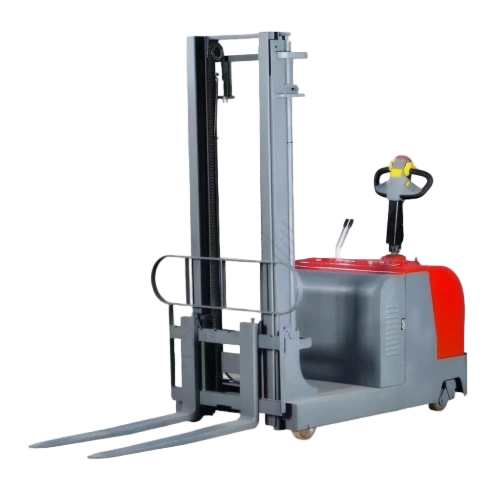
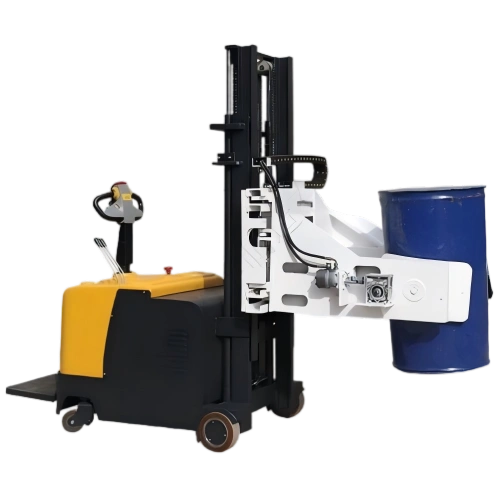
Our extensive product portfolio covers a full range of equipment, including reach trucks, standing-type counterbalanced forklifts, seated counterbalanced forklifts, fully electric pallet trucks, fully electric stackers, compact electric transport vehicles, semi-electric stackers, semi-electric pallet trucks, hydraulic lifting platforms, as well as various packaging machinery such as square and round wrapping machines. In addition to standard products, we also provide customized solutions to meet specific operational needs, helping customers improve efficiency and reduce operational costs.
The company is supported by a team of experienced engineers, technical experts, and professional management personnel with extensive experience in electric logistics equipment design and manufacturing. By adopting high-quality materials, advanced components, and precision production processes, we ensure that every product meets strict quality standards. Meanwhile, we continuously introduce advanced international technologies and modern management systems, enabling our products to achieve excellent performance in terms of durability, safety, energy efficiency, and operational stability.
Quality is at the core of everything we do. From raw material selection to final inspection, every step is strictly controlled to guarantee product reliability and consistency. Our equipment is designed with a focus on high performance, user-friendly operation, safety, and long service life, helping customers maximize productivity while minimizing maintenance costs.
We also place great emphasis on customer service and support. Hefei AJ Forklifts Equipment Co., Ltd. has established a comprehensive service system, offering pre-sales consultation, technical guidance, installation support, and timely after-sales service. Our goal is to build long-term partnerships by delivering efficient, reliable, and value-driven solutions.
Driven by the philosophy of continuous improvement and innovation, we adhere to the principles of “quality first, customer foremost, and management excellence.” We actively explore new technologies, including intelligent control systems and energy-saving solutions, to meet the evolving demands of modern logistics and industrial automation.
For Novosibirsk buyers, this manufacturing depth translates into three practical advantages: a broad portfolio for mixed-fleet standardization, an engineering team that can discuss cold-weather customization and documentation, and a service system designed to support export projects through pre-sales consultation, technical guidance, installation support, and after-sales service. E-E-A-T for industrial equipment is demonstrated through factory processes, testing discipline, application engineering, and service records—not slogans.
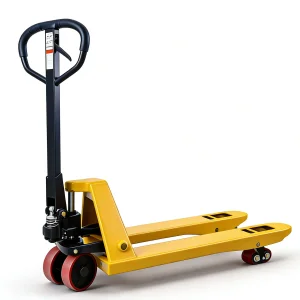
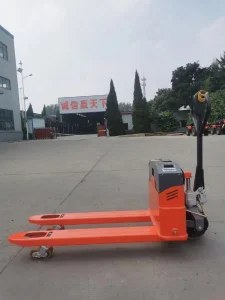
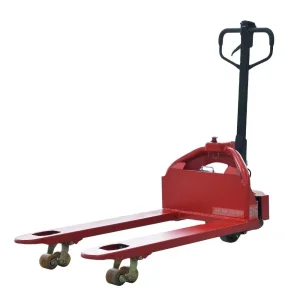
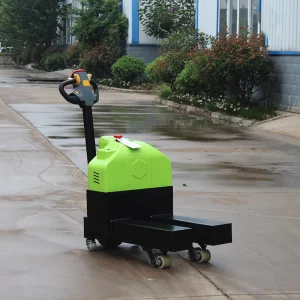
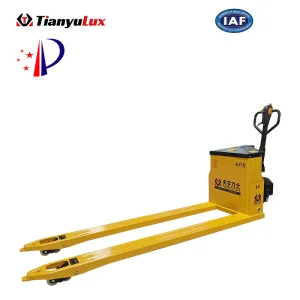
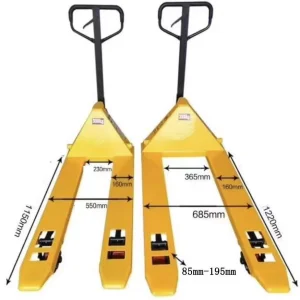
The following product portfolio includes the full original range referenced in this white paper. All product URLs and images are preserved so that procurement teams can verify specifications, request quotations, and compare configurations.
Global buyers are not only purchasing equipment; they are purchasing resilience. The following trends are visible across warehousing, manufacturing, retail, and logistics, and they influence how Novosibirsk buyers should specify equipment.
Internal combustion equipment is being replaced by electric alternatives in enclosed spaces. Electric pallet jacks reduce emissions and noise, improving indoor air quality and operator comfort.
Falling lithium battery costs and opportunity charging are changing fleet design. For multi-shift operations, the higher upfront cost can be offset by lower maintenance, faster charging, and longer cycle life.
With tight labor markets, low steering effort, intuitive controls, and safety features become retention and productivity tools, not optional extras.
Urban warehouses are smaller and faster. Compact electric pallet trucks with short turning radii and 1150 mm forks fit dense racking and rapid replenishment.
Corporate buyers increasingly request energy consumption data, battery recyclability, and supplier environmental documentation. Electric equipment supports ESG reporting.
Trade flows across Eurasia are shifting. Suppliers with export documentation, EAEU compliance experience, and flexible Incoterms can reduce cross-border friction.
These answers address high-intent questions commonly raised by Novosibirsk buyers, EPC contractors, and distribution operators.
Most indoor pallet handling uses 1.5–2.0 t walkie electric pallet jacks. Choose 2.0 t when loads are dense, pallets are wet or damaged, or the floor has ramps. Choose 3.0 t rough-terrain models for outdoor yards, construction materials, and uneven surfaces. Always confirm actual load center and fork length; a nominal capacity rating assumes a specific load center.
Start with battery chemistry and charging. LFP lithium with self-heating or a cold-weather BMS is often preferred for opportunity charging; lead-acid can work but requires temperature-compensated charging and warm charging areas. Specify low-temperature hydraulic oil, cold-flexible seals, heated grips, display protection, and condensation management. Test lift speed and runtime at the target temperature, not at room temperature.
At minimum, plan for TR CU 010/2011 machinery safety, TR CU 004/2011 low-voltage safety, and TR CU 020/2011 EMC. Also prepare Russian-language manuals, nameplates, customs documentation, warranty terms, and spare-parts lists. The exact scope depends on the model and battery/charger configuration; confirm with the importer and a qualified compliance consultant.
Most export shipments move by rail or road through China/Kazakhstan or via Russian Far East ports and rail. Delivery time depends on Incoterms, customs clearance, and seasonal congestion. Buyers should request a door-to-door plan, customs documents, and a spare-parts shipment strategy. For urgent projects, air freight may be used for critical parts, not complete units.
Yes, project-specific documentation and cold-weather configuration can be discussed during quotation. Hefei AJ Forklifts Equipment Co., Ltd. supports pre-sales consultation, technical guidance, installation support, and after-sales service. Final documentation scope should be written into the purchase order.
Lithium typically offers faster charging, lower maintenance, and longer cycle life, but has a higher upfront cost and requires low-temperature charging controls in Siberia. Lead-acid has a lower initial price but needs watering, ventilation, and warm charging areas. Model TCO over five years with energy, maintenance, replacement, and downtime.
Support can include remote diagnostics, fault-code analysis, spare-parts kits, operator training materials, and distributor technical training. Response time depends on the service partner and spare-parts location. Ask for a written service-level agreement, critical spares list, and escalation path to the factory.
Yes. Common customizations include fork length, width, scale integration, wheel type, battery capacity, charger configuration, and safety options. Provide load data, aisle dimensions, floor conditions, and duty cycle so engineering can validate the configuration.
Send your load weight, duty cycle, aisle width, temperature range, and compliance requirements. Our engineering team will respond with a configuration recommendation, documentation checklist, and quotation path.
Selected from the original product range for warehouse, cold-chain, retail, and rough-terrain applications. All links lead to the original product pages.
 AJ Forklifts