Every forklift begins its shift with more than a key turn. A trained operator needs evidence that the machine is ready for work. Daily inspection checklists create that evidence before pallets move, forks lift, or traffic increases. They help identify leaking hydraulic fluid, damaged forks, worn tires, weak brakes, and unreadable warning labels. Small defects can become serious interruptions near racking, loading docks, and pedestrians. The process also gives supervisors a clear record for follow-up.
What are the essential daily forklift inspection checklists? They should cover the operator’s seat, restraint system, steering, service brake, parking brake, horn, lights, alarms, tires, forks, mast, chains, hydraulics, battery or fuel system, and visible leaks. The checklist should match the forklift type and the manufacturer’s instructions. A cold morning may reveal a slow hydraulic response. A loose chain may only show itself during close visual inspection. Practical experience matters because operators notice changes that a quick signature can hide. Still, experience is not a substitute for training or documented procedures.
An effective inspection is deliberate, not decorative. Operators should inspect before use, report defects clearly, and remove unsafe equipment from service according to site procedures. Supervisors should review repeated findings, verify repairs, and avoid treating paperwork as proof of safety. No checklist catches everything. That limitation deserves attention. Clear wording, honest reporting, and regular review make the checklist more reliable. Used consistently, it supports safer decisions, better maintenance planning, and a workplace where equipment condition is discussed before an incident forces the conversation.
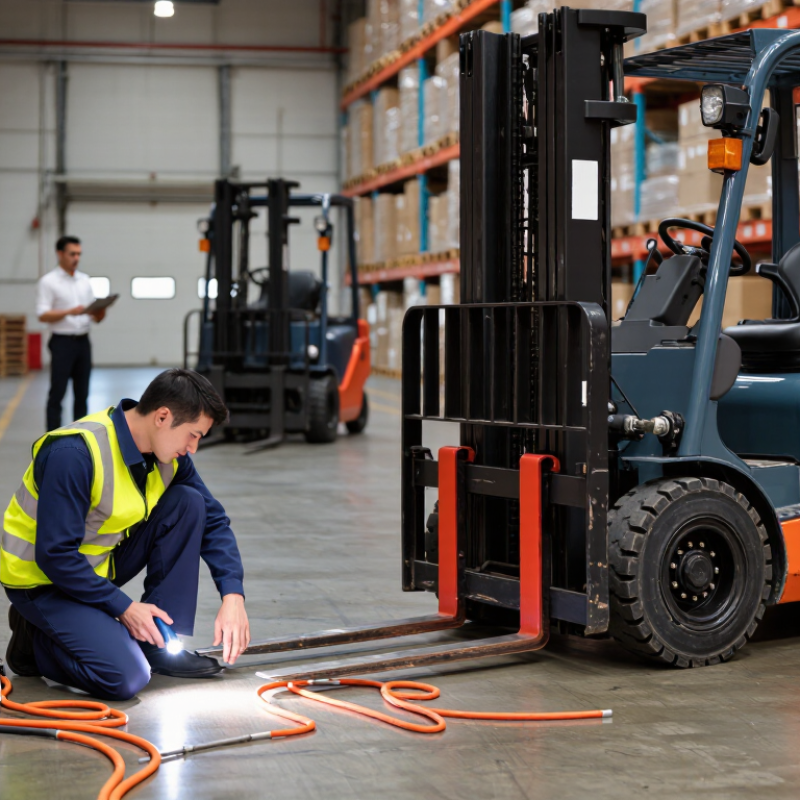
A daily forklift inspection checklist covers the machine’s condition before it carries a load. Start with a walk-around on level ground. Look for fresh oil or coolant beneath the truck, cracked tires, loose wheel hardware, and damage to the overhead guard. Check that forks are straight, secure, and free of visible cracks. Even a small bend matters.
From the operator’s seat, check the seat belt, mirrors, and controls. Test the service and parking brakes, steering, horn, lights, and reverse alarm in a clear area. Raise the mast only enough to observe its movement. Chains should appear evenly tensioned, with no obvious damage; hoses should not show leaks or bulges. Check the battery or fuel supply, and confirm that the capacity plate is readable. A quiet warning light can be easy to miss in a noisy warehouse.
The checklist should also include the work area: clear travel paths, stable floors, and adequate visibility. Record defects with specific details, such as “left front tire split,” rather than “tire bad.” A checklist can still be rushed. Pause when an item is unclear, and report anything that could affect safe operation. Follow workplace procedures for taking defective equipment out of service; do not rely on a handwritten note alone.
| Inspection Area | What to Check | Acceptable Condition | Why It Matters | Action if a Defect Is Found |
|---|---|---|---|---|
| Forks and attachments | Inspect fork blades, heels, mounting points, locking pins, and any fitted attachment for visible cracks, bends, excessive wear, or looseness. | Forks and attachments are secure and show no visible damage that could affect safe load handling. | Damaged or unsecured components can fail while carrying a load. | Do not use the forklift. Report the defect and have the equipment assessed by an authorized person. |
| Mast, chains, and hoses | Look for damaged or uneven lift chains, loose hardware, leaking hydraulic fluid, and cracked, abraded, or bulging hoses. | Components appear intact, operate smoothly, and show no visible hydraulic leaks. | Mast or hydraulic problems can cause unexpected movement or loss of load control. | Stop the inspection if an immediate hazard is present; keep the truck out of service until repaired and checked. |
| Tires and wheels | Check tires for cuts, chunking, separation, embedded objects, and abnormal wear. Check wheels and fasteners for visible damage or looseness. | Tires and wheels are intact and suitable for the surface and operating conditions. | Tire or wheel damage can affect stability, steering, and braking. | Report damage or suspected looseness; do not operate if safe control may be affected. |
| Brakes and parking brake | Test the service brake and parking brake in a clear, safe area according to site procedures. | Brakes respond reliably and hold the truck as intended. | Effective braking is essential for controlled travel and stopping. | Remove the forklift from service if either brake does not work correctly. |
| Steering and controls | Check steering response and verify that direction, lift, tilt, and attachment controls move and respond as intended. | Controls are clearly identifiable, return or operate as designed, and do not stick or behave unpredictably. | Reliable controls help the operator maneuver and handle loads safely. | Stop use and report any sticking, unexpected movement, or loss of control. |
| Lights, horn, and warning devices | Test the horn, lights, alarms, and other warning devices fitted to the truck and required for the work area. | Required devices function and are sufficiently visible or audible for the operating environment. | Warnings help alert pedestrians and other vehicle operators to the forklift's presence. | Report failed or damaged devices and follow site rules before operating in affected areas. |
| Seat belt and operator restraints | Inspect the seat belt or restraint for cuts, fraying, damaged buckles, and secure mounting; verify that it latches properly. | The restraint is present, secure, and functional. | A working restraint helps protect the operator in the event of an incident or tip-over. | Do not operate if a required restraint is missing or defective; report it for repair. |
| Battery, fuel, and fluid levels | Check the applicable energy source and fluid levels in accordance with the truck instructions and site procedures. Look for leaks, damaged cables, or loose connections. | Levels and connections meet operating requirements; no hazardous leaks or visible electrical damage are present. | Leaks, damaged connections, or insufficient fluids can create safety hazards or cause equipment failure. | Follow the correct site procedure for the energy source; report leaks or damage and keep the truck out of service if unsafe. |
| Overhead guard and load backrest | Check for visible cracks, deformation, missing fasteners, or other damage to fitted protective structures. | Structures are secure and show no visible damage that could compromise their function. | Protective structures help reduce exposure to falling objects and shifting loads when correctly fitted and maintained. | Report damage promptly and do not use the truck if protective equipment may be compromised. |
| Data plate and capacity information | Confirm the truck's capacity information and any attachment-related information are present and legible. | Required information is readable and applicable to the truck's current configuration. | Operators need correct capacity information to avoid exceeding safe load limits. | Do not handle loads if capacity information is missing, unreadable, or uncertain; seek guidance from an authorized person. |
| General condition and work area readiness | Look for loose parts, unusual odors, visible damage, fluid beneath the truck, and obstructions or hazards in the planned travel area. | The forklift is free of obvious hazards, and the route is suitable for the planned task. | A general check can reveal problems that may not fit a single component category. | Record and report concerns; address route hazards before moving the forklift or beginning work. |
| Inspection record and handover | Record the inspection result, date or shift, operator identification, defects, and any follow-up according to site procedures. | The record is complete, accurate, and available to the responsible people. | Consistent records support communication between shifts and help ensure defects are tracked. | Clearly identify out-of-service equipment and notify the appropriate supervisor or maintenance contact. |
Important: A daily checklist does not replace scheduled maintenance, the operator's training, or the truck's operating instructions. If a defect could affect safe operation, do not use the forklift until it has been reported, assessed, and cleared for service.
Check forks for cracks or bends, tires for cuts, and chains for visible damage. Test the horn, lights, brakes, and steering according to site procedures.
Look for fresh oil beneath the truck, a loose overhead guard, or a frayed seat belt. Small clues matter.
It prompts operators to check the same parts and record defects. Clear notes are more reliable than memory.
Do not dismiss the change as probably fine. Report it and follow workplace procedures before the forklift is used again.
No. Keep it out of service and contact the supervisor or designated maintenance staff.
Record the time, location, affected part, and observed behavior. “Fluid beneath the left side” is clearer than “looks bad.”
Stop in a suitable area, lower the forks, secure the truck, and follow the site shutdown procedure.
No. A visual check may miss hidden damage, especially in poor light. I might miss something when rushed, so enough time matters.
Only if trained and authorized. Guessing can make a small fault worse. Not magic.
What are the essential daily forklift inspection checklists? They are practical, pre-shift guides that help operators examine key parts of a forklift, including tires, forks, brakes, steering, lights, warning devices, fluid levels, and visible signs of damage or leaks. Completing these checks before work begins can reveal safety hazards early, allowing issues to be addressed before they put operators, coworkers, or equipment at risk.
Consistent inspection records also show that checks are being completed and help workplaces maintain organized safety practices. By identifying wear or mechanical problems promptly, checklists can prevent minor issues from becoming costly repairs, reduce equipment damage, and limit unexpected downtime. If an operator finds a problem, they should stop using the forklift, report the issue to the responsible supervisor or maintenance team, and follow workplace procedures before the equipment returns to service.

 AJ Forklifts