Electric trucks are changing how freight companies approach emissions, especially on predictable urban and regional routes. Their impact depends on more than the vehicle itself. Electricity sources, charging schedules, payloads, and route planning all affect the final emissions picture. A delivery truck returning to the depot each evening may be easier to charge than a long-haul vehicle crossing remote areas. The details matter.
This guide explores the Top 10 Ways Electric Trucks Cut Logistics Emissions, from replacing diesel miles to improving fleet efficiency. It also considers “How to reduce carbon footprint in logistics with electric trucks” in practical terms: matching vehicles to routes, reducing empty travel, and tracking energy use alongside fuel savings. Small choices count. So do charging times and battery performance in cold weather. Results will vary. Operators should compare real fleet data, not rely on broad promises.
Electric trucks can reduce tailpipe emissions, but they do not make every logistics operation carbon-free. Electricity generation, vehicle manufacturing, and battery replacement deserve attention too. That part is easy to overlook. The following ideas focus on measurable steps businesses can test, review, and improve. Some may not suit every fleet. A careful pilot, with clear baseline data, can reveal where emissions fall—and where the plan needs work.
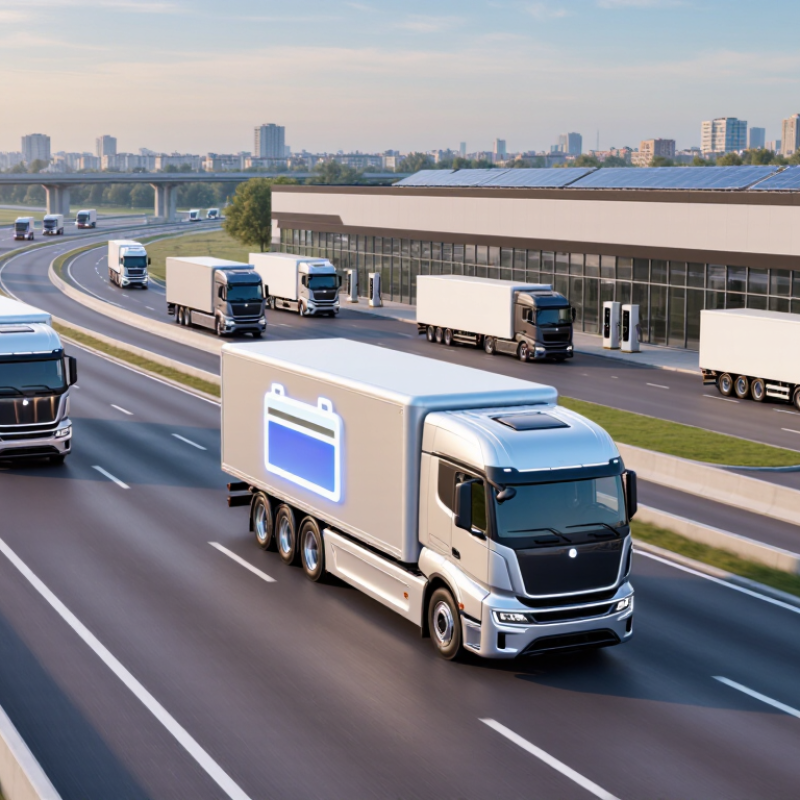
An electric truck leaves no exhaust plume at a loading dock or curb. The U.S. Department of Energy’s Alternative Fuels Data Center confirms that all-electric vehicles produce zero tailpipe emissions. That means no combustion-related carbon dioxide, nitrogen oxides, or exhaust particles from the truck itself. The distinction matters where diesel trucks idle beside warehouses, homes, and busy streets. The EPA’s 2024 greenhouse-gas inventory reports that transportation produced 28% of U.S. greenhouse-gas emissions in 2022. That figure covers the entire transportation sector, not trucks alone, but it shows why cutting vehicle emissions matters.
Zero at the pipe. Not everywhere. Electricity generation and battery production can still create emissions, while tires continue to shed particles onto roads. A charging depot powered by a carbon-intensive grid will deliver smaller climate benefits than one using cleaner electricity. Fleet operators should track energy sources alongside tailpipe reductions; otherwise, the accounting can look better than the full picture. In daily service, electric trucks can remove exhaust from stop-and-go routes, where repeated acceleration and idling make local air quality especially relevant. The change is tangible: no diesel fumes around a morning delivery queue. Still, quieter operation may hide vehicle movement, so safer depot procedures matter too.
When an electric truck slows, its motor can work as a generator. Regenerative braking sends some of the vehicle’s motion energy back to its battery. On a delivery route, that can happen at traffic lights, downhill stretches, and loading-yard turns. The energy would otherwise be lost mainly as heat through conventional friction brakes.
The effect depends on the route and how the truck is driven. A loaded vehicle descending a long grade may recover more energy than one cruising steadily on a flat highway. Smooth, early deceleration usually gives the system more opportunity to capture power. Abrupt stops still require friction brakes, and a nearly full or cold battery may accept less regenerated energy. There are limits.
Drivers may feel a gentle pull when they lift off the accelerator, though settings differ between vehicles. Training helps them use that response without compromising safe stopping distances. Dispatch teams can also compare energy-use records across similar routes, rather than assuming every trip will show the same gains. Real roads are messy; weather, payload, traffic, and driver habits all affect the result. A short downhill run might return only a modest amount, but repeated braking across a busy urban shift can make recovery more noticeable.
Illustrative battery energy recovered under different driving conditions, in kilowatt-hours per 100 km.
Regenerative braking converts some of a truck’s motion into electrical energy during deceleration and sends it back to the battery. These illustrative modeled values are not universal measurements; actual recovery varies with vehicle load, speed, route gradient, battery temperature, and state of charge.
Efficient motors lower the electricity needed to move each delivery, especially on routes with frequent stops. The U.S. Department of Energy’s Alternative Fuels Data Center reports that electric vehicles convert more than 77% of grid energy into power at the wheels. Conventional gasoline vehicles convert about 12% to 30%. For a delivery truck, that difference means less energy wasted as heat during daily driving.
At a busy loading dock, the truck can pause without an idling engine consuming fuel. In stop-and-go traffic, regenerative braking sends some braking energy back to the battery. The International Energy Agency’s Global EV Outlook 2024 identifies charging access and vehicle use patterns as important factors in heavy-duty electrification. That matters because a fully loaded truck climbing hills, running cabin heating, or covering long distances may use far more energy than a short urban route. Small details count. Fleet managers should compare kilowatt-hours per delivery, not just advertised range. They should also check payload, weather, and charging losses. I would not assume every route delivers the same savings; measured data can expose inconvenient gaps.
Top 10 Ways Electric Trucks Cut Logistics Emissions
How Charging with Clean Electricity Lowers Fleet Emissions
Electric trucks have no tailpipe exhaust, but their climate benefit depends partly on how their electricity is generated. Charging with wind, solar, or other low-carbon power can reduce emissions across a delivery fleet. The difference is practical: a truck plugged in at a depot during a cleaner-energy period may have a smaller charging footprint than one using electricity when fossil-fuel generation is higher. Results vary by location and time, so fleets should avoid assuming every electric mile is equally clean.
Tips: Schedule charging when cleaner power is available, where route plans allow. Use depot solar or verified clean-electricity supply when practical. Track energy use and charging times alongside mileage. Small adjustments can help. But schedules are not always flexible, and charging equipment has costs. Measure actual data rather than relying on a broad estimate.
Fleet managers can compare electricity use with regional grid-emissions data to assess progress. Keep the calculation method consistent, and include charging losses where possible. This creates a clearer picture than vehicle specifications alone. It is also worth reviewing the numbers as the grid changes. One honest limitation: clean charging cannot erase emissions from vehicle and battery production. Still, cleaner electricity can lower day-to-day fleet emissions, especially when paired with efficient routes and well-planned charging.
| # | Emissions-reduction lever | How it works | Useful fleet metric | Potential contribution |
|---|---|---|---|---|
| 1 | Charge with low-carbon electricity | Electric trucks have no tailpipe emissions. Charging from cleaner electricity lowers emissions associated with the energy used to operate them. | Electricity emissions intensity (g CO₂e/kWh) | High; depends on the electricity supply |
| 2 | Schedule charging when electricity is cleaner | Where time-varying electricity data and managed charging are available, shifting charging to lower-carbon periods can reduce charging-related emissions. | Charging time by hour and hourly grid emissions intensity | Grid-dependent |
| 3 | Use renewable electricity for charging | Renewable generation or qualifying electricity procurement can reduce the emissions attributed to charging, depending on how the electricity claim is accounted for. | Share of charging matched with renewable electricity | Potentially high; depends on supply and accounting |
| 4 | Regenerate energy during braking | Regenerative braking converts some vehicle motion back into electrical energy, reducing energy drawn from the battery, particularly in stop-and-go operation. | Energy recovered through regenerative braking (kWh) | Route- and driving-pattern dependent |
| 5 | Reduce empty running | Better load planning and backhaul matching reduce unnecessary vehicle-kilometres and the electricity required to move the truck. | Empty kilometres as a share of total kilometres | Depends on operations and freight demand |
| 6 | Optimize routes and dispatch | Efficient routing can reduce distance, congestion exposure, and avoidable detours, lowering energy use per delivery. | Vehicle-kilometres and kWh per route or delivery | Depends on route conditions |
| 7 | Improve payload utilization | Consolidating compatible shipments can deliver more freight per trip, reducing energy use and emissions per tonne-kilometre. | Payload utilization and tonne-kilometres per kWh | Depends on capacity and shipment mix |
| 8 | Train for energy-efficient driving | Smoother acceleration, appropriate speeds, and reduced unnecessary idling can lower energy consumption in many operating conditions. | kWh per kilometre by driver or vehicle | Depends on driving conditions and consistency |
| 9 | Maintain tyres and vehicle systems | Correct tyre pressure and timely maintenance help limit avoidable energy losses and support efficient vehicle operation. | Energy use per kilometre and maintenance compliance | An efficiency measure; fleet-specific |
| 10 | Track energy and emissions together | Combining vehicle energy data with electricity emissions factors helps fleets identify high-impact routes, charging periods, and operational improvements. | kg CO₂e per kilometre, delivery, or tonne-kilometre | Enables measurement and targeted reductions |
Note: Electric trucks eliminate tailpipe emissions, but total emissions depend on electricity generation, vehicle and battery production, vehicle use, and the accounting method. Actual results vary by truck, route, load, charging source, and local grid.
Route planning helps electric trucks use energy where it matters. Dispatchers can match vehicle range to distance, payload, road gradient, and expected traffic. A loaded truck climbing hills needs a different plan from a lightly loaded urban delivery van. Small choices matter. Grouping nearby deliveries can reduce empty miles, while avoiding repeated stop-and-start congestion may conserve battery power. Planners should also account for weather and cabin heating or cooling, which can affect usable range. Estimates are useful, not guarantees. Real routes rarely behave perfectly.
Fleet management turns those plans into practical routines. Charging schedules can align with loading windows, so trucks spend less time waiting at the depot. Telematics can show energy use, idle time, and route delays across the fleet. Managers can compare those records with driver feedback and adjust schedules or vehicle assignments. Data needs context. A dashboard may look reassuring while a truck repeatedly arrives with little charge left. Review the exceptions, not just the averages. Driver notes about detours, steep streets, or crowded delivery bays can reveal problems that route software misses. Revising a route may take time, and the first version may not be the best one.
No. All-electric trucks have no tailpipe emissions, so they release no exhaust from combustion while driving. Zero at the pipe.
No. Electricity generation and battery production can create emissions. Tires also shed particles onto roads. The full picture is messier.
Charging with cleaner electricity can increase climate benefits. A depot using carbon-intensive power may deliver smaller reductions than expected.
Local delivery routes can benefit, especially near warehouses, homes, and busy streets. No diesel fumes around the morning loading queue.
Planners can match truck range to distance, payload, hills, and traffic. Grouping nearby deliveries can also reduce empty miles.
Weather, cabin heating or cooling, steep roads, and traffic can affect range. Estimates help, but real routes rarely behave perfectly.
Charging can fit around loading windows, reducing depot waiting. Telematics can track energy use, idle time, and delays across the fleet.
A dashboard may hide trucks arriving with little charge left. Driver notes can reveal detours or crowded delivery bays. Data needs context.
Yes. Quieter operation may make vehicle movement harder to notice. Depot procedures still matter, and the first plan may need revision.
Electric trucks help logistics fleets reduce emissions by eliminating tailpipe pollution during operation. Their efficient electric motors use less energy per delivery, while regenerative braking captures some of the energy normally lost when slowing down and returns it to the battery. Together, these features can make everyday freight movement more energy-efficient, especially on routes with frequent stops.
How to reduce carbon footprint in logistics with electric trucks also depends on how they are charged and managed. Charging with clean electricity can lower emissions across the vehicle’s use, while thoughtful route planning helps avoid unnecessary distance, idle time, and energy use. Fleet management can coordinate vehicle assignments, charging schedules, and delivery plans so trucks are used efficiently. Combining these approaches allows logistics operators to make meaningful emissions cuts while maintaining reliable deliveries.

AJ Forklifts