10 Tips to Fix Your Electric Forklift Battery Not Charging?

Time:2026-04-29 Author:Oliver
0%

When you encounter the frustrating issue of "Why is my electric forklift battery not charging," it's essential to understand the underlying problems. Electric forklifts are crucial in various industries, and their efficiency heavily relies on the battery's performance. A malfunctioning battery can lead to significant downtime and loss of productivity.

It could be as simple as a loose connection or as complex as a battery cell failure. Often, operators overlook routine maintenance, leading to unexpected battery failures. Regular checks can help identify issues before they escalate. It's not just about replacing the battery; understanding why it fails is key.

Employing preventive care fosters reliability in your equipment. If your battery still struggles to charge, seeking professional help might be necessary. Each electric forklift is unique, and solutions can vary. Empower yourself with knowledge to tackle these challenges effectively. The journey to a well-functioning battery starts with informed decisions and understanding the equipment you rely on daily.
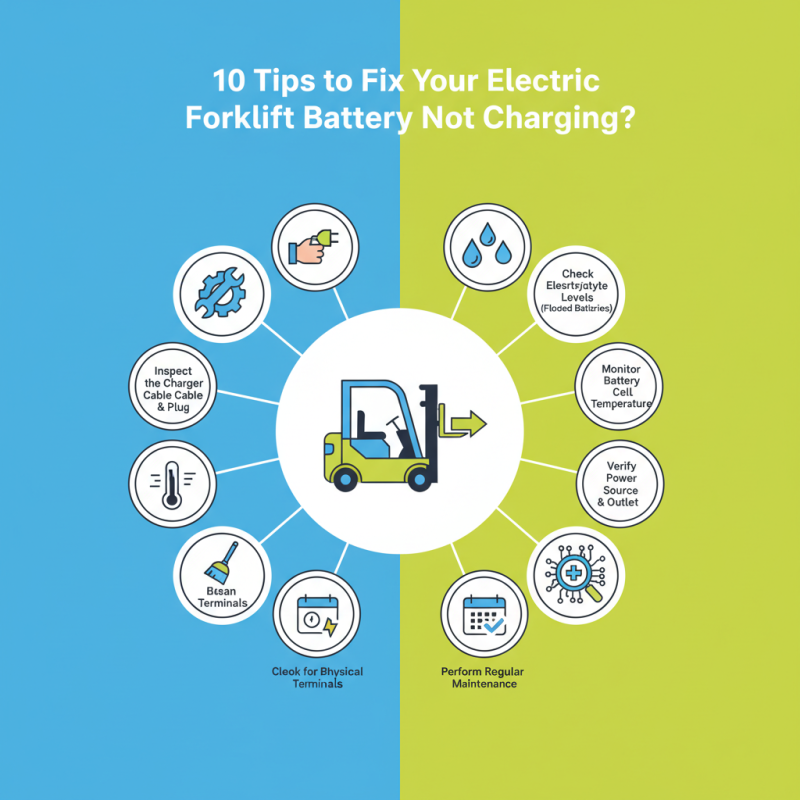
10 Tips to Fix Your Electric Forklift Battery Not Charging?

Identifying Common Symptoms of Electric Forklift Battery Charging Issues

Electric forklift batteries are crucial for efficient operations. Identifying symptoms of charging issues can save time and financial resources. A study by the Battery Technologies Institute shows that 70% of forklift downtime relates to battery problems.

Common symptoms include slow charging times, which could indicate sulfation. This occurs when lead sulfate crystals accumulate on battery plates. A battery that fails to reach its full charge is another sign. According to Forklift Battery Association reports, batteries can lose 20% of capacity over time. Inspect connections for corrosion, as this often disrupts the charging process.

In some cases, abnormal noises during charging may arise from an internal short circuit. Ideally, batteries should not emit any unusual sounds. Lastly, if the battery operates at inconsistent speeds, it reflects deeper issues. Addressing these symptoms promptly can prevent more severe failures later on.

Electric Forklift Battery Charging Issues

Understanding the Basics of Electric Forklift Battery Charging Systems

Electric forklifts rely on efficient battery charging systems to perform optimally. Understanding these systems is crucial for maintenance and operation. Many operators overlook common issues. Electric forklift batteries typically last between 1,500 to 2,000 charge cycles. Knowing when to replace the battery is essential for avoiding reduced performance.

Battery charging systems are often complex. They involve chargers that convert AC power to DC current. A faulty charger can lead to undercharging or overcharging, both detrimental to battery health. Data reveals that improper charging techniques can reduce battery lifespan by up to 30%. Over time, this means not just a financial burden, but also potential operational downtime.

Regular maintenance checks are vital. Inspecting cables, connectors, and terminals can prevent charging issues. If the battery won’t charge, check connections first. Dust and corrosion can block effective charging. Keep in mind that batteries require a specific charging voltage, and using the wrong charger can cause failures. Simple mistakes can lead to significant consequences, highlighting the need for better awareness of battery systems.

Step-by-Step Troubleshooting for Non-Charging Forklift Batteries

When an electric forklift battery fails to charge, troubleshooting can feel daunting. Begin by checking the power source. Ensure the outlet is functional and that there are no issues with the electrical supply.

Next, inspect the battery cables. Look for frayed wires or loose connections, which can disrupt the charging process. A simple visual check can save time and frustration.

After confirming the basics, assess the battery's condition. Dirty terminals can hinder charging. Clean them with a mixture of baking soda and water. Be cautious, as battery acid may be present. If the battery still does not charge, consider testing individual cells. Low voltage in one cell can affect the entire battery's performance. If you find damaged cells, it may be necessary to replace the entire battery or specific cells.

Regular maintenance helps prevent issues. Monitor charge cycles closely. Overcharging or undercharging can reduce battery lifespan. By implementing these inspections, operators can minimize downtime and maximize efficiency. Remember, keeping detailed records of battery health is crucial for future reference.

Maintenance Tips to Prevent Future Forklift Battery Charging Problems

Maintaining an electric forklift battery is crucial for optimal performance. Regularly check battery water levels, ensuring they are filled to the recommended level. Distilled water is best to prevent mineral buildup. Avoid overcharging, as this can lead to premature battery failure. Monitor charging cycles closely. Too many cycles can diminish battery life over time.

Routine cleaning can also prevent issues. Corrosion on terminals can hinder connectivity. Use a mixture of baking soda and water to clean terminals. Inspect cables for wear and damage regularly. If worn or frayed, replace them immediately. Consider temperature control, as extreme heat or cold can adversely affect battery efficiency.

Create a maintenance schedule. Document battery usage, charging times, and any maintenance performed. Consistency helps in identifying patterns and potential problems. Don’t ignore warning signs like unusual sounds or decreased performance. Addressing small issues early can save you from costly repairs later. A proactive approach is key to preventing future battery charging problems.

When to Seek Professional Help for Electric Forklift Battery Issues

When dealing with electric forklift battery issues, recognizing when to seek professional help is crucial. If you've tried basic troubleshooting and the battery still won't charge, it's time to call an expert. There could be underlying problems, such as a faulty charger or damaged connections. Ignoring these issues can lead to bigger problems, costing more to fix in the long run.

Always pay attention to your battery's performance. If the charging time suddenly increases or the battery drains quickly, don’t hesitate. Even minor irregularities may indicate a larger issue. Relying on personal expertise isn’t always sufficient. Professional technicians have the tools and knowledge to diagnose problems accurately. They can identify specific issues that may not be visible to the untrained eye.

It's also important to consider safety. Working with batteries can be dangerous. Mishandling a malfunctioning battery could lead to accidents or further damage. Regular maintenance and checks can prevent many issues. However, knowing when to step back and seek help can save you time and frustration. Take warnings seriously, and don’t overlook the importance of expert advice.

10 Tips to Fix Your Electric Forklift Battery Not Charging? - When to Seek Professional Help for Electric Forklift Battery Issues

Tip Number Tip Description When to Seek Help
1 Check the battery connections for dirt or corrosion. If corrosion is severe and cannot be cleaned easily.
2 Measure the battery's voltage with a multimeter. If voltage readings are significantly lower than expected.
3 Ensure the charger is functioning properly. If the charger shows signs of damage or does not work.
4 Look for any blown fuses or tripped circuits. If fuses keep blowing after replacements.
5 Check the electrolyte levels in lead-acid batteries. If levels are low and cannot be replenished easily.
6 Inspect the battery for physical damage or bulging. If any damage is found, stop using immediately.
7 Perform a load test on the battery. If the battery fails the load test.
8 Check the charger settings and compatibility. If settings do not match battery specifications.
9 Make sure the forklift is not overloaded. If heavy loads persist despite resolving other issues.
10 Consult the forklift’s manual for troubleshooting tips. If assistance is not forthcoming from manual guidance.

FAQS

: What are the common symptoms of electric forklift battery charging issues?

: Symptoms include slow charging times, failure to reach full charge, and corrosion on connections.

What does slow charging indicate?

It could indicate sulfation, where lead sulfate crystals accumulate on battery plates.

How can I identify if my battery is losing capacity?

If the battery fails to hold a charge or reach full capacity, it may have lost 20% or more of capacity.

Why should I inspect connections to the battery?

Corrosion can disrupt the charging process, leading to undercharging or inefficient performance.

What unusual signs should I look for during charging?

Any abnormal noises could suggest an internal short circuit affecting battery health.

When do electric forklift batteries typically need replacing?

Batteries usually last between 1,500 to 2,000 charge cycles, but individual circumstances vary.

What makes charging systems complicated?

They convert AC power to DC current and require specific settings for optimal performance.

How can improper charging affect battery lifespan?

It can reduce lifespan by up to 30%, leading to financial and operational burdens.

What regular maintenance should I perform on my battery?

Check cables, connectors, and terminals to prevent charging problems; dust can block effective charging.

What can happen if I use the wrong charger?

Using the wrong charger can cause failures and lead to significant operational issues.

Conclusion

When facing the issue of "Why is my electric forklift battery not charging," understanding the common symptoms can help identify the root cause. This article outlines essential troubleshooting steps, starting with recognizing symptoms such as a lack of power or unusual noises during charging. It then delves into the components of electric forklift battery charging systems, offering insights into how they function and what might go wrong.

In addition to step-by-step troubleshooting guidance for non-charging batteries, the article emphasizes the importance of regular maintenance to prevent future issues, including checking connections and ensuring proper charging practices. Lastly, it advises readers on when to seek professional help, ensuring that forklift operations remain safe and efficient. By following these tips, operators can tackle battery charging issues effectively and minimize downtime.

Oliver

Oliver

Oliver is a seasoned marketing professional with a wealth of expertise in driving brand awareness and engagement. With a deep understanding of our company's product offerings, he consistently delivers high-quality content that enriches our professional blog. His insights not only shed light on......