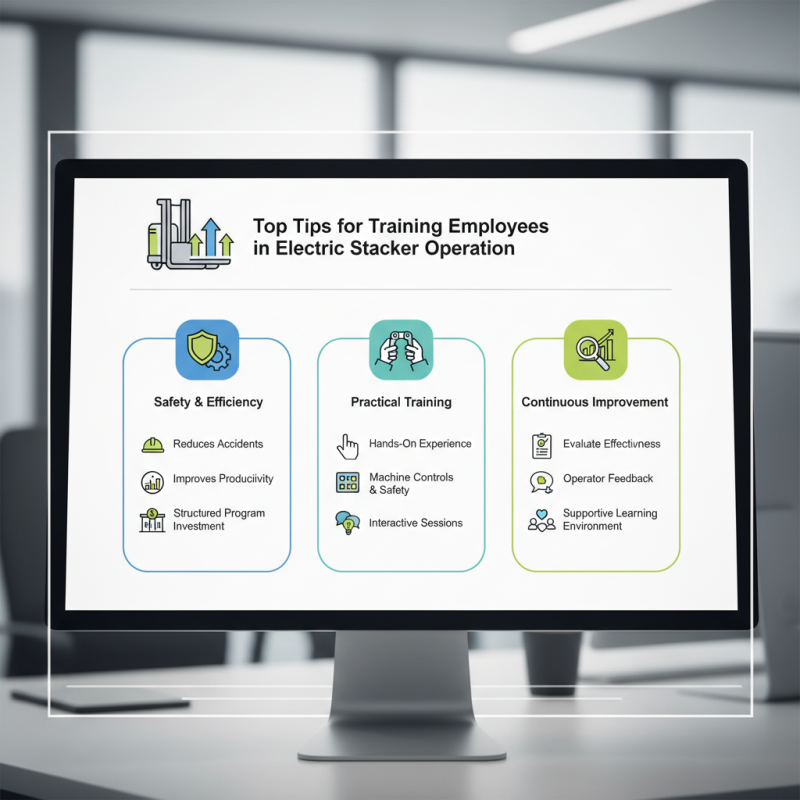
Training employees in electric stacker operation is crucial for safety and efficiency. Proper training reduces accidents and improves productivity. Companies must invest in a structured training program.
How to train employees for electric stacker operation involves practical engagement and clear guidelines. Hands-on experience is vital. Employees should learn the machine's controls and safety features. Interactive sessions can enhance understanding.
It's important to evaluate training effectiveness regularly. Feedback from operators helps identify areas for improvement. Some employees may struggle with the equipment at first. Developing a supportive learning environment is essential. This ongoing support builds confidence and enhances skills over time.
Understanding the basics of electric stacker operation is crucial for enhancing workplace efficiency. Electric stackers are designed for lifting and moving goods in warehouses and factories. Familiarizing employees with the equipment can lead to safer working conditions. According to a report by the Occupational Safety and Health Administration (OSHA), improper operation causes numerous workplace injuries each year. Training can reduce these incidents significantly.
Effective training should cover essential aspects. Operators need to know how to inspect stackers before use. Daily checks ensure that the equipment is safe to operate. They should also learn about weight limits, as exceeding them can lead to accidents. In a survey by the National Safety Council, 70% of workplace incidents are linked to operator error. This emphasizes the importance of thorough training programs.
Practical experience is vital. Allowing trainees to operate stackers under supervision builds their confidence. Real-world scenarios help them learn how to react in emergencies. However, training should also include discussions on common mistakes. Identifying pitfalls, such as poor spatial awareness, can improve overall safety. Training programs must evolve. Frequent reassessments help keep operators informed about best practices and safety standards.
Training employees in electric stacker operation requires a solid focus on safety protocols. These vehicles can be dangerous if not operated correctly. Proper training helps reduce accidents and injuries in the workplace. It is critical to ensure that operators understand the risks involved.
One essential protocol is conducting a pre-operational safety check. This involves inspecting the stacker's brakes, steering, and controls. Employees should be taught to look for signs of wear or damage. Regular maintenance schedules should be established to prevent equipment failure. Additionally, operators must understand load limits to avoid tipping.
Creating a safe training environment is also important. Employees should practice under supervision until they demonstrate competence. It's vital to encourage open discussions about challenges faced during operation. Sharing experiences can lead to valuable insights. Regular refreshers on safety practices can foster a culture of safety. Emphasizing communication can further enhance operational safety.
| Training Aspect | Details | Safety Protocols | Frequency of Training |
|---|---|---|---|
| Pre-Operation Checks | Inspect the electric stacker for any damages or wear. | Ensure brakes, steering, and controls are functional. | Before each shift |
| Operator Training | Hands-on training on how to operate electric stackers. | Educate on load capacity and stability. | Initial training + biannual refreshers |
| Load Handling | Proper methods for picking, transporting, and placing loads. | Use correct lifting techniques to avoid accidents. | Monthly workshops |
| Emergency Procedures | Identifying emergency situations and necessary responses. | Know evacuation routes and procedures. | Quarterly drills |
| Safety Gear | Usage of personal protective equipment (PPE) during operation. | Wearing helmets, gloves, and safety shoes. | Every training session |
Hands-on training is essential for equipping employees with the skills needed for electric stacker operation. Start with a safety briefing. Explain the importance of safety gear and procedures. Include a demonstration of the stacker, focusing on its controls and safety features. Employees should observe before attempting their first lift.
Next, allow each employee to practice under supervision. Break down the tasks into smaller steps. For example, focus on starting the stacker, steering, and lifting loads separately. Provide feedback during this stage. Highlight common mistakes, such as improper posture or incorrect load handling. Encourage self-assessment after each attempt to promote learning.
Reflection ensures continuous improvement. Workers should discuss challenges they faced during training. This dialogue fosters a culture of safety and awareness. By emphasizing practical experience and honest reflection, companies can cultivate a skilled workforce in electric stacker operation.
Testing employee proficiency in electric stacker operation involves structured approaches. Start with hands-on assessments. Create real-world scenarios they might encounter. Observe their reactions and decision-making processes. Ensure that employees demonstrate safe practices while operating equipment. This method reveals both skill and confidence levels.
Written exams can supplement practical tests. They assess knowledge of safety protocols and operational procedures. Short quizzes can be effective. Include scenario-based questions that require critical thinking. Reflections from employees post-assessment can provide insight. Discuss what they felt confident about and where they struggled. Use this feedback to improve future training sessions.
Encouraging peer assessments can also be beneficial. Employees learn from observing one another. They may notice skills they want to emulate or gaps they need to address. Regularly revisiting proficiency tests is important. This maintains skills and reinforces the importance of safety. Continuous reflection ensures that training evolves with the changing workplace environment.
In the realm of electric stacker operation, continuous improvement is vital. Regular feedback is a key component for employee development. According to industry studies, effective feedback can boost employee performance by up to 39%. This not only enhances productivity but also reduces the risk of accidents.
Employees often learn best from their experiences. When they receive constructive feedback, it encourages a growth mindset. Organizations that prioritize ongoing training see a 15% increase in retention rates. However, some companies still fall short in providing adequate support. Many workers report feeling unprepared for challenges. These gaps highlight the need for a structured feedback loop and additional training sessions.
Effective training doesn’t end after initial certification. It should evolve with technological advances. The average electric stacker has a lifespan of seven years. Hence, regular updates and refresher courses are crucial. Companies should provide opportunities for learning beyond basic operation. Investing in continuous training not only benefits employees but also enhances overall safety and efficiency in the workplace.
: Training enhances workplace efficiency and safety by reducing operator errors.
Operators need to inspect brakes, steering, and controls for safety.
Training should address common mistakes and promote discussions about challenges faced during operation.
Hands-on practice under supervision builds confidence and prepares operators for real-world scenarios.
They can discuss what they felt confident about and where they struggled after assessments.
Conducting a pre-operational safety check is essential to ensure safe operation.
Regular refreshers maintain skills and reinforce safety importance over time.
Hands-on assessments and scenario-based written quizzes help evaluate both skills and knowledge.
Employees learn from observing each other and can identify skills to emulate or gaps to address.
Frequent evaluations ensure training stays updated with best practices for safety and efficiency.
Training employees for electric stacker operation is essential for both safety and efficiency in the workplace. First, it is crucial to understand the basics of electric stackers, including their components and functionality. Essential safety protocols must be implemented during training to minimize accidents, emphasizing the importance of personal protective equipment and safety checks.
In terms of practical training, step-by-step hands-on guidelines help familiarize employees with operation techniques and machinery handling. Evaluating proficiency through best practices ensures that employees meet operational standards. Moreover, fostering a culture of continuous improvement by providing feedback and opportunities for further training plays a vital role in enhancing skills and ensuring that employees are confident in their abilities. Ultimately, knowing how to train employees for electric stacker operation not only protects the workforce but also optimizes overall productivity.

AJ Forklifts