How to Safely Attach and Detach Forklift Accessories for 2026?

Time:2026-03-27 Author:Oliver
0%

In the fast-evolving landscape of material handling, knowing **how to attach and detach forklift accessories safely** is crucial for operational efficiency. With the global forklift market projected to grow at a CAGR of 5.5% from 2021 to 2027, understanding safety protocols has never been more important. According to a report by the Occupational Safety and Health Administration (OSHA), improper attachment and detachment procedures contribute significantly to workplace accidents and inefficiencies.

During significant events like the 2026 Canton Fair, where innovations in manufacturing and machinery are highlighted, industry standards for safety must be at the forefront. Advanced technologies, including AI-driven navigation and intelligent search features, streamline the selection of equipment and suppliers. However, even the most advanced systems cannot replace the necessity for adherence to safety norms in forklift operations.

Many operators overlook safety checks in the rush to increase productivity. This can lead to dangerous situations and equipment damage. The process of attaching and detaching accessories, if not executed carefully, poses risks. Each year, thousands suffer injuries from mishandled equipment. Therefore, equipping operators with knowledge on safe practices is essential to enhance both safety and efficiency in workplace environments.
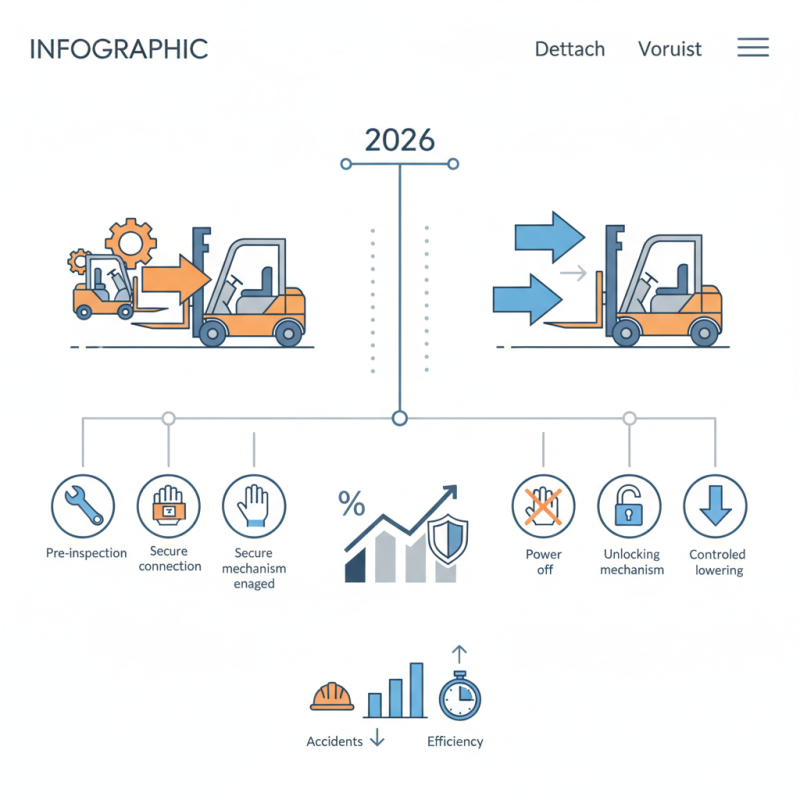
How to Safely Attach and Detach Forklift Accessories for 2026?

Understanding Forklift Accessory Types and Uses

Understanding forklift accessories is crucial for their proper use. Different types serve specific functions. Attachments like forks, clamps, and bins aid various tasks. Forks are essential for moving pallets. Clamps help secure loads that are not on pallets. Bins provide efficient storage options for bulk materials. Each accessory has a defined purpose and must match the forklift's capacity.

Safety is a significant concern when using these attachments. Improperly attached accessories can lead to accidents. Always check compatibility with your forklift model. Inspect all connections before operation. Some users overlook this step. A quick visual check may not be enough. Regular maintenance is vital to ensure reliability. Ensure accessories are clean and free from damage.

Operators often report challenges in detaching accessories. Some struggle with securing them safely. It takes practice to master this skill. Training is beneficial but not foolproof. Mistakes can happen in high-pressure situations. Reflecting on past experiences can lead to improvement. Proper training and mindfulness can enhance safety and efficiency.

How to Safely Attach and Detach Forklift Accessories for 2026? - Understanding Forklift Accessory Types and Uses

Accessory Type Description Weight Limit Common Uses Safety Tips
Fork Extensions Extensions for lifting longer loads. Up to 5,000 lbs Transporting pallets, beams, and large loads. Ensure proper fit; secure with safety straps.
Buckets Used for lifting materials like sand or gravel. Up to 3,000 lbs Construction and landscaping applications. Check for leaks; maintain weight balance.
Pallet Jacks Hand-operated equipment for moving pallets. Up to 5,500 lbs Warehousing and inventory management. Inspect before use; operate on flat surfaces.
Clamps Used for gripping items tightly. Varies by model Handling cylinders and heavy loads. Ensure secure grip; regular maintenance.
Lift Platforms Raised platform for working at height. Up to 1,000 lbs Maintenance and construction tasks. Use harnesses; avoid overloading.

Essential Safety Gear for Handling Forklift Accessories

When handling forklift accessories, safety is paramount. This involves wearing essential gear such as gloves, helmets, and steel-toed boots. These items protect against potential injuries during attachment and detachment processes. It's important to choose the right gloves for grip and dexterity. A helmet guards against heavy loads falling unexpectedly. Steel-toed boots provide support and protect your feet.

Proper training also plays a critical role in safety. Forklift operators must understand how to handle accessories properly. Mistakes can happen easily. Equipment can be heavy and awkward. Insufficient training increases risks. Regular safety briefings can help remind workers of protocols.

Always perform equipment checks before use. Look for wear and tear on the accessories. Inspecting them helps avoid accidents. If something feels off, trust your instincts. It’s better to pause and check than to risk injury. Building a culture of safety is vital in any workplace. Encourage open communication about safety concerns among workers.

Step-by-Step Guide to Attaching Forklift Accessories Securely

Attaching and detaching forklift accessories safely is crucial for workplace efficiency. In 2023, a report indicated that 25% of forklift accidents involved improper handling of attachments. This statistic highlights the need for meticulous procedures. Begin by inspecting both the forklift and the accessory. Check for any signs of wear or damage. A worn part can lead to severe consequences.

Next, engage the forklift’s lifting mechanism. Ensure that the accessory is aligned correctly with the forks. Use pin locks if available; they provide additional security. However, according to safety experts, many operators skip these minor checks, risking accidents. Frequent training on proper attachment techniques can minimize such oversights.

Detaching accessories requires the same caution. Lower the attachment gently, and ensure the area is clear of personnel. A surprising 40% of injuries occur during this phase. Using clear signals and maintaining communication with your team is vital. Understand the gravity of your task. Rushing or overlooking details can lead to mistakes that impact safety and productivity.

Forklift Accessory Attachment Safety Ratings for 2026

This bar chart illustrates the safety ratings of various forklift accessories based on user feedback and safety audits for the year 2026. Each accessory is rated on a scale from 1 to 10, where 10 represents the highest safety standard.

Best Practices for Detaching Forklift Accessories Safely

When it comes to detaching forklift accessories, safety should always be the top priority. Workers often rush the process, which can lead to accidents. It’s essential to have a clear plan in place. Before starting, ensure the forklift is on stable ground. Check that it is powered off, and the parking brake is engaged. Always wear personal protective equipment like gloves and safety shoes.

Inspect the attachment mechanism thoroughly. Look for wear and tear, as well as loose bolts. It may seem minor, but small issues can lead to significant risks. If something looks off, it’s better to pause and assess. Communicate with team members clearly to avoid confusion. Use hand signals or radios to ensure everyone stays informed during the detachment process.

Once the attachment is ready to be removed, use the appropriate tools. Avoid using makeshift solutions. These can cause damage or injuries. Engage with the equipment carefully. If it resists, don’t force it. Reflect on your actions; always consider the potential consequences of haste. Taking time to do it right can prevent injuries and costly repairs down the line.

Regular Maintenance and Inspection for Forklift Accessories

Regular maintenance and inspection are critical for forklift accessories. According to the Occupational Safety and Health Administration (OSHA), improper maintenance leads to 20% of forklift accidents. Frequent checks ensure that accessories function correctly. Damaged attachments can severely affect safety. A simple visual inspection can reveal cracks or wear.

Inspecting accessories should be routine. Operators should check for loose bolts or signs of rust. Reports indicate that 50% of companies do not follow a formal inspection routine. This negligence increases risks and potential accidents. Creating a checklist can help guide operators through the inspection process, ensuring nothing is overlooked.

Training programs play a vital role. Employees must understand the importance of safety around forklift accessories. Data shows that companies with regular training have 30% fewer accidents. Incorporating real-life scenarios can enhance awareness. Without a culture of safety, even the best equipment can become hazardous. Regular maintenance inspections are not just procedures; they are investments in safety and efficiency.

FAQS

: What is essential safety gear for handling forklift accessories?

: Essential safety gear includes gloves, helmets, and steel-toed boots. These protect against potential injuries.

Why is proper training important for forklift operators?

Proper training helps avoid mistakes. Untrained operators increase risks while handling heavy and awkward equipment.

How often should equipment checks be performed?

Equipment checks should be routine before use. Look for wear, tear, or anything that feels off.

What should workers do if they notice minor issues during inspections?

It’s better to pause and assess or repair any minor issues. Ignoring them can lead to significant risks.

What safety practices are crucial when detaching forklift accessories?

Always wear PPE, ensure the forklift is stable and powered off, and communicate clearly with team members.

Why shouldn't workers rush the detachment process?

Rushing can lead to accidents. Take time to do it right to prevent injuries and costly repairs.

How can companies reduce forklift accidents through training?

Regular training is key. Companies with ongoing training see 30% fewer accidents and better awareness among employees.

What regular inspections should operators perform?

Operators should inspect for loose bolts, rust, or visible damage. A checklist can help ensure nothing is overlooked.

Why is a culture of safety important in the workplace?

A culture of safety encourages communication about concerns. It reduces the likelihood of accidents and improves overall safety.

What can happen if maintenance inspections are neglected?

Neglected inspections can lead to accidents. Regular checks are essential for ensuring safety and equipment efficiency.

Conclusion

In the article "How to Safely Attach and Detach Forklift Accessories for 2026," we delve into the various types of forklift accessories and their specific uses, which are essential for improving operational efficiency. To ensure safe handling, the article emphasizes the importance of using essential safety gear when managing these tools. It provides a comprehensive step-by-step guide on how to attach and detach forklift accessories safely, focusing on techniques that minimize risks and prevent accidents.

Additionally, best practices for detaching forklift accessories are outlined, highlighting the significance of following proper protocols. Regular maintenance and inspection of accessories are also discussed, ensuring that they function optimally and safely. Overall, the article serves as a crucial resource for understanding how to attach and detach forklift accessories safely, fostering a safer work environment.

Oliver

Oliver

Oliver is a seasoned marketing professional with a wealth of expertise in driving brand awareness and engagement. With a deep understanding of our company's product offerings, he consistently delivers high-quality content that enriches our professional blog. His insights not only shed light on......