Difference Between Reach Truck and Forklift What to Know?

Time:2026-05-01 Author:Henry
0%

In the world of warehouse operations, choosing the right equipment is crucial. Many operators often wonder what is the difference between a reach truck and a forklift. According to the Material Handling Industry's 2022 report, reach trucks have become increasingly popular for their ability to navigate tight spaces. These trucks can extend their forks to reach high shelves, making them ideal for narrow aisles.

While forklifts are versatile, they have limitations in height and space. The same report indicates that reach trucks can improve pallet storage density by 25%. This efficiency can lead to significant cost savings for businesses. Choosing between the two requires an understanding of specific operational needs.

Both machines serve unique functions, yet many users struggle to identify the most suitable option. Each piece of equipment has its own strengths and weaknesses. Integrating the right truck into your operations can enhance workflow. Thus, recognizing what sets apart reach trucks and forklifts is essential for maximizing productivity.
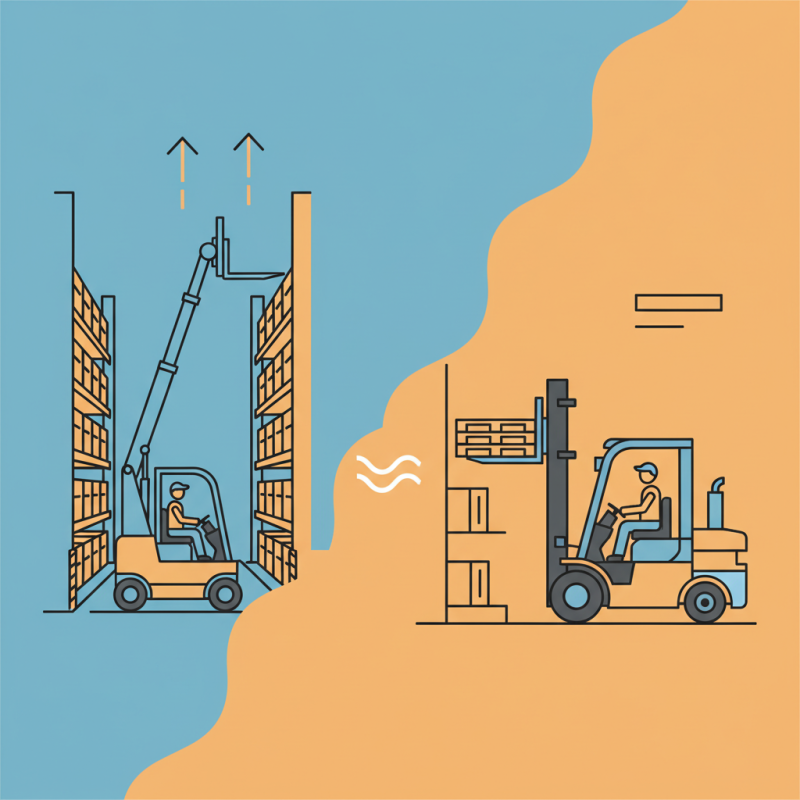
Difference Between Reach Truck and Forklift What to Know?

Understanding Reach Trucks: Features and Applications

Reach trucks are essential in warehouses for their ability to maneuver in narrow aisles. They feature a design that allows operators to extend the forks vertically, reaching high storage locations. This capability makes them ideal for maximizing vertical space. According to the Industrial Truck Association, reach trucks often exceed lift heights of 30 feet, providing significant advantages in densely packed environments.

One noteworthy application of reach trucks is in order picking. These machines enable operators to efficiently retrieve items from high shelves, saving time and labor costs. Research from the Material Handling Industry highlights that using reach trucks can increase warehouse productivity by up to 25%. However, the learning curve for operators can be steep. Proper training is crucial to prevent accidents. The intricate mechanics and the need for precision can pose challenges.

Additionally, reach trucks require regular maintenance. Their systems can be sensitive, and neglect may lead to operational inefficiencies. While they offer benefits, such as improved throughput, they also demand a financial investment for upkeep. This balance of advantages and drawbacks necessitates careful consideration by warehouse managers.

Exploring Forklifts: Types and Uses in Various Industries

Forklifts play a vital role in many industries, each with specific needs. There are various types of forklifts, including electric, diesel, and rough terrain models. They excel in warehouses, construction sites, and retail environments. These vehicles can lift heavy loads and navigate tight spaces. Their versatility makes them invaluable tools.

Tips: Always assess the terrain before operation. Ensure the forklift is suitable for the job. Regular maintenance checks are crucial for safety and efficiency.

Understanding the types of forklifts helps in selecting the right one. Electric forklifts are quieter and eco-friendly, ideal for indoor use. Diesel forklifts power through outdoor tasks with ease. However, they emit fumes. Operators must be trained adequately to avoid mishaps.

Tips: Consider load capacity and height requirements. Inspect the forklift before each use. Safety gear is essential for operators. Remember, improper handling can lead to accidents. Reflect on your training to identify areas for improvement.

Key Differences Between Reach Trucks and Forklifts

Reach trucks and forklifts serve distinct functions in warehouse operations. Understanding these differences can enhance efficiency. According to industry reports, reach trucks excel in narrow aisles, improving storage capacity. They can extend their forks to reach high shelves, making it easier to access goods stored at height.

On the other hand, forklifts are more versatile. They handle heavier loads but require wider aisles. For example, forklifts can lift weights exceeding 5,000 pounds, making them ideal for heavy-duty tasks. However, they often struggle in tight spaces. A survey published by the Material Handling Industry Association reveals that 70% of warehouses favor reach trucks for high-density storage. Yet, many operators still rely on forklifts despite their size limitations. This choice reveals an ongoing debate in the industry regarding efficiency versus versatility.

Training is crucial for both vehicles. Operators must possess the right skills to ensure safety and productivity. Data from OSHA indicates that improper training can increase accident rates by up to 25%. Regular assessments can help maintain safety standards. As warehouses evolve, companies may need to rethink their equipment choices based on specific operational needs.

Advantages and Disadvantages of Using Reach Trucks

When comparing reach trucks and forklifts, it’s essential to consider the specific advantages and disadvantages of reach trucks. A reach truck is ideal for narrow aisles and high storage. They can extend their forks to retrieve pallets from great heights, which enhances warehouse efficiency. According to a report by the Material Handling Institute, integrating reach trucks can improve storage space by up to 30%. This data highlights their capacity for maximizing vertical spaces.

However, reach trucks come with limitations. They require trained operators skilled in navigating tight spaces. Inexperienced operators may face challenges, increasing the risk of accidents. Additionally, reach trucks are typically less versatile than forklifts. They are not designed for ramp usage or rough terrains, making them unsuitable for all applications. The Operational Safety and Health Administration (OSHA) emphasizes that improper use can lead to workplace hazards, underlining the importance of proper training.

In terms of costs, reach trucks can be more expensive initially than standard forklifts. Maintenance can also be complex due to their advanced design. A poorly maintained reach truck can lead to unexpected downtimes. This can hamper productivity and increase operating costs. Overall, understanding these nuances is vital for businesses considering reach trucks as part of their material handling solutions.

Difference Between Reach Truck and Forklift

Feature Reach Truck Forklift
Lifting Height Up to 40 feet Up to 20 feet
Turning Radius Narrow Wide
Load Capacity 3,000 to 5,500 lbs 3,000 to 40,000 lbs
Best Use Narrow aisles and high storage General lifting and transporting
Cost Higher initial cost Generally lower cost

When to Choose a Forklift Over a Reach Truck

When considering a forklift versus a reach truck, understanding their ideal use cases is vital. A report from the Material Handling Industry (MHI) indicates that forklifts dominate 70% of warehouse equipment usage. These machines excel in outdoor environments and can handle diverse loads. Their versatility makes them a preferred choice for varied applications, particularly in loading and unloading operations.

Reach trucks, however, shine in narrow aisle environments. According to a study published by the National Forklift Safety Standard, reach trucks can access heights of up to 30 feet. This capability is essential for maximizing storage in high warehouses. They allow warehouses to increase vertical storage, thereby optimizing space. However, this comes with limitations, such as decreased speed and the inability to operate effectively on uneven surfaces.

Choosing a forklift can be beneficial when the operation requires high mobility and less vertical reach. Industries that handle heavier loads outdoors often prefer forklifts. Their robustness facilitates easy maneuvering. Conversely, reach trucks are more efficient for organized warehouses with compact storage needs. Each option has strengths and weaknesses that should guide decision-making based on specific operational requirements.

Difference in Capacity and Height Between Reach Trucks and Forklifts

This chart illustrates the differences in max lifting capacities and heights between forklifts and reach trucks. Forklifts typically have a higher lifting capacity, while reach trucks can extend to greater heights, making each suitable for different warehouse applications.

FAQS

: What are reach trucks used for?

: Reach trucks are used in warehouses to maneuver in narrow aisles and access high storage locations.

How high can reach trucks lift?

Reach trucks often exceed lift heights of 30 feet, ideal for maximizing vertical storage space.

What is a key application of reach trucks?

They are widely used for order picking, efficiently retrieving items from high shelves.

What are the training needs for operators?

Proper training is essential for operators to prevent accidents due to the vehicles' intricate mechanics.

How do reach trucks compare to forklifts?

Reach trucks excel in narrow aisles, while forklifts handle heavier loads but require wider aisles.

What maintenance is required for reach trucks?

Regular maintenance is crucial as neglect can lead to operational inefficiencies and safety hazards.

Why might some warehouses still rely on forklifts?

Forklifts offer versatility and can lift heavier loads, despite struggling in tighter spaces.

How can training improve safety?

Regular training assessments can help identify areas for improvement and reduce accident rates.

What factors should be considered in forklift selection?

Consider load capacity, height requirements, and the terrain before operating a forklift.

What are some challenges of using reach trucks?

The learning curve can be steep, and operators need precision to handle them safely and effectively.

Conclusion

The article "Difference Between Reach Truck and Forklift What to Know?" explores the distinct features and practical applications of reach trucks and forklifts in various settings. Understanding reach trucks, their specific capabilities for maneuvering in tight spaces, and their effectiveness in warehouse environments is crucial. Conversely, forklifts are versatile equipment used across multiple industries, each type designed for specific loads and tasks.

A key section of the article addresses the central inquiry: "What is the difference between a reach truck and a forklift?" It highlights that while reach trucks excel in narrow aisles and vertical lifting, forklifts offer broader utility and are better suited for diverse load sizes. The advantages and disadvantages of utilizing reach trucks and the circumstances under which one might opt for a forklift over a reach truck are also discussed, helping readers make informed decisions based on their operational needs.

Henry

Henry

Henry is a dedicated marketing professional with a profound expertise in the company's offerings. With years of experience in the industry, he possesses an impressive understanding of the market dynamics and consumer behaviors that drive success. Henry is committed to sharing his insights through......