Maintaining a material handling truck is crucial for operational efficiency. Businesses must understand the costs involved. Industry expert John Smith from Logistics Insights emphasizes, “Understanding maintenance costs helps companies budget effectively.” Many organizations overlook these expenses, which can lead to unexpected financial strain.
According to a recent report by the Material Handling Industry of America, companies spend an average of $5,000 annually per truck on maintenance. This figure, however, can vary significantly based on usage, truck type, and age. Ignoring regular maintenance can result in higher long-term costs. Therefore, it’s essential to ask, how much does it cost to maintain a material handling truck?
Neglecting maintenance can also affect productivity. For instance, an unmaintained truck could lead to downtime. This can impact delivery schedules and customer satisfaction. Awareness of costs and preventive measures is vital.
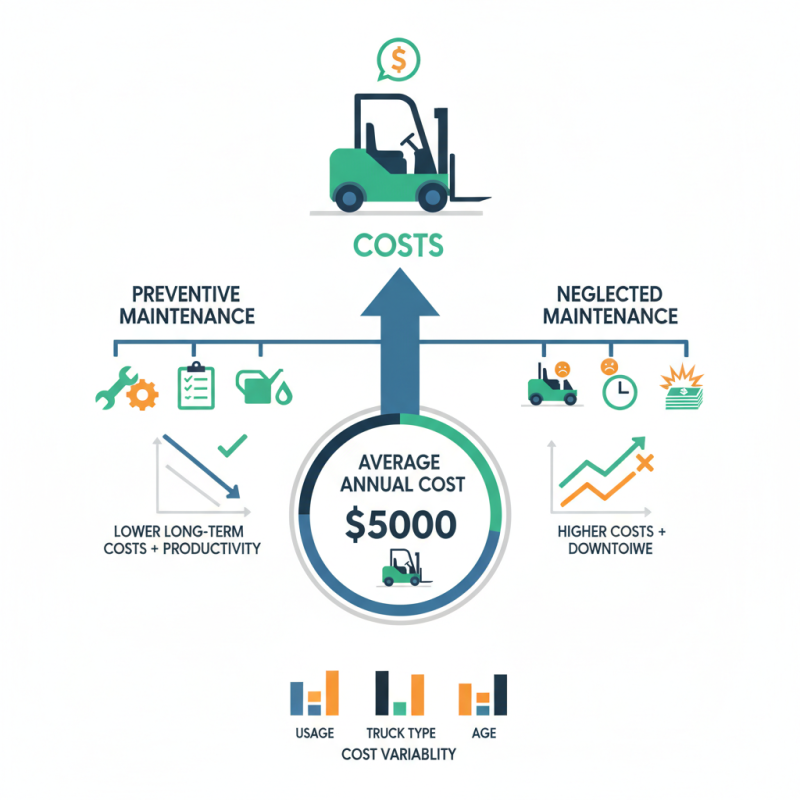
Maintaining a material handling truck involves various costs that can fluctuate over time. One of the primary factors is the type of truck. Different trucks have unique maintenance needs. For example, electric trucks may require less frequent servicing compared to their diesel counterparts. However, electric batteries can be expensive to replace.
The age of the truck plays a crucial role too. Older trucks tend to have more wear and tear. This means more frequent repairs, which can escalate costs. Regular inspections are vital. Neglecting them can lead to larger, unexpected expenses. Parts also vary in price based on availability and demand. When certain components become scarce, their prices can soar.
Environmental conditions impact maintenance as well. Trucks operating in harsh conditions may require more repairs. Dust, moisture, and extreme temperatures can wear down essential parts faster. Lastly, operator skill should not be overlooked. Poor handling can lead to damage, increasing maintenance needs. Prioritizing training can mitigate some costs.
Maintaining a material handling truck involves various tasks, each with specific cost implications. Regular inspections are critical. They help identify potential issues early. A routine inspection can cost around $100 to $300. This expense is minor compared to the cost of major repairs if problems go unnoticed.
Basic tasks, like oil changes and fluid checks, also add up. An oil change typically costs between $50 to $100, depending on the type of fluid used. Replacing hydraulic fluids may range from $75 to $150. These are essential to keep the truck functioning efficiently.
Tips: Establish a maintenance schedule. This helps prevent costly downtime. Document all maintenance tasks. It can improve accountability and traceability. Investing in regular training for operators can lead to better handling, reducing wear and tear. Remember, staying proactive is cheaper than dealing with emergencies. Regular upkeep builds a reliable workflow while preserving your budget.
| Maintenance Task | Frequency | Cost per Task (USD) | Annual Cost (USD) |
|---|---|---|---|
| Engine Oil Change | Every 3000 miles | $150 | $600 |
| Brake Inspection | Every 7500 miles | $200 | $533 |
| Tire Rotation | Every 6000 miles | $100 | $200 |
| Battery Check | Every 3 months | $50 | $200 |
| Hydraulic Fluid Check | Every 6 months | $80 | $160 |
| General Inspection | Every 10000 miles | $300 | $300 |
| Total Annual Maintenance Cost | Annual Totals | $2093 | |
Proper maintenance of material handling trucks is crucial for minimizing overall operational costs. Regular maintenance schedules play a significant role in this process. According to a report by the Material Handling Industry Association, scheduled maintenance can reduce unexpected breakdowns by up to 40%. This reduction leads to significant savings. Without proper maintenance, businesses could face additional costs related to repairs, downtime, and even safety incidents.
The frequency of maintenance can affect a company's budget. A study from the Industrial Truck Association indicates that companies that maintain their trucks every 250 hours report 20% lower overall maintenance costs. In contrast, those that neglect frequent checks often deal with larger, more complex issues that escalate expenses.
Investing in routine checks can seem costly upfront, but it helps avoid huge repair bills later. Companies need to reflect on their maintenance practices to avoid long-term pitfalls.
Creating a structured maintenance plan is essential. Each truck requires specific attention based on usage. Overlooking simple tasks might lead to bigger complications. Data shows that 30% of all truck failures come from a lack of preventive maintenance. This statistic highlights the importance of regular servicing. Companies often overlook this aspect, focusing solely on immediate production needs. The balance between daily operations and proper maintenance ensures efficiency and cost-effectiveness in the long run.
When considering material handling trucks, the choice between new and older models is crucial.
A recent industry report indicates that maintaining a new truck can cost upwards of $10,000 annually. This cost includes routine servicing, parts replacement, and labor. In contrast, older trucks may have lower purchase prices, but soaring maintenance expenses can offset savings. Industry statistics show that older models can require maintenance costs of $15,000 or more due to wear and tear.
Additionally, older trucks are often less efficient. They may consume up to 20% more fuel than newer models. This inefficiency can lead to higher operational costs over time. A study from the Material Handling Industry Association (MHIA) suggests that businesses often underestimate these cumulative expenses. Relying on an older fleet might save money upfront but could prove costly in the long run.
Moreover, the resale value of older trucks plummets as repair bills increase. This depreciation impacts financial planning significantly. Many companies find themselves trapped in an endless cycle of repairs. This raises an important question: are short-term savings worth the long-term financial strain? Reflecting on these factors is key to making an informed decision.
Maintaining a material handling truck can be costly. According to a recent industry report, maintenance costs can account for up to 15% of the total operating expenses. However, there are effective strategies to reduce these expenses over time.
Regular maintenance schedules are crucial. Many experts recommend quarterly inspections to catch minor issues before they become major repairs. This proactive approach can save companies 20% on repair costs. Utilizing telematics can also enhance oversight. Real-time data can help monitor truck performance and alert operators to potential problems early.
Training operators is another key area. Surprisingly, improper use of equipment is a common cause of breakdowns. Educating staff on best practices can minimize wear and tear. Proper training can reduce maintenance costs by as much as 25%. Many companies overlook these factors. Addressing them may seem time-consuming, but the long-term savings are considerable.
: Regular maintenance reduces unexpected breakdowns by up to 40%, leading to significant cost savings.
Companies maintaining trucks every 250 hours report 20% lower maintenance costs compared to those with neglected checks.
Neglecting maintenance can lead to complex issues, increasing expenses and causing unplanned downtime.
Experts recommend quarterly inspections to catch minor issues before they escalate into major repairs.
Yes, telematics provides real-time data that monitors truck performance and alerts operators of potential issues.
Proper training can reduce breakdown causes, potentially cutting maintenance costs by 25%.
Yes, overlooking simple tasks can lead to bigger complications affecting truck performance and costs.
Maintenance costs can account for up to 15% of total operating expenses.
Many focus on immediate production needs, ignoring the long-term benefits of proper maintenance practices.
Companies need to evaluate their maintenance practices to avoid long-term financial pitfalls and complications.
Maintaining a material handling truck involves various factors that significantly influence overall costs. Key elements include the type of truck, its age, the frequency of maintenance required, and the specific tasks involved, such as inspections and repairs. Understanding "how much does it cost to maintain a material handling truck" necessitates looking at the common maintenance tasks and their respective cost implications, which can vary widely based on the truck's condition and usage patterns.
Frequent maintenance can help in minimizing long-term expenses, as neglect may lead to more severe issues and higher costs. Additionally, a cost comparison between new and older material handling trucks may reveal that investing in a new truck could reduce maintenance needs, ultimately saving money in the long run. Implementing tips to reduce maintenance costs, such as regular servicing and proper operator training, can further enhance efficiency and minimize financial burden over time.

AJ Forklifts