In today’s rapidly evolving industrial landscape, efficiency is paramount. Businesses seek solutions that not only streamline operations but also enhance safety and reduce costs. This leads to a critical question: Why use an AGV instead of a manual forklift? Automated guided vehicles (AGVs) have rapidly gained traction in warehouses and production facilities. They offer precise navigation and can operate continuously without human intervention.
AGVs reduce the risk of accidents, providing a safer work environment. They minimize manual handling, thereby decreasing employee fatigue. However, transitioning to AGVs requires careful consideration. Not every facility may benefit equally from this technology. Businesses must evaluate their specific needs, such as layout and workflows.
While AGVs present a high-tech solution, some organizations may hesitate. The initial investment can be daunting. Moreover, existing staff may require training to adapt to the new system. It’s essential to weigh these factors against the long-term benefits. Embracing AGVs can lead to greater operational efficiency, but the choice must align with strategic goals.
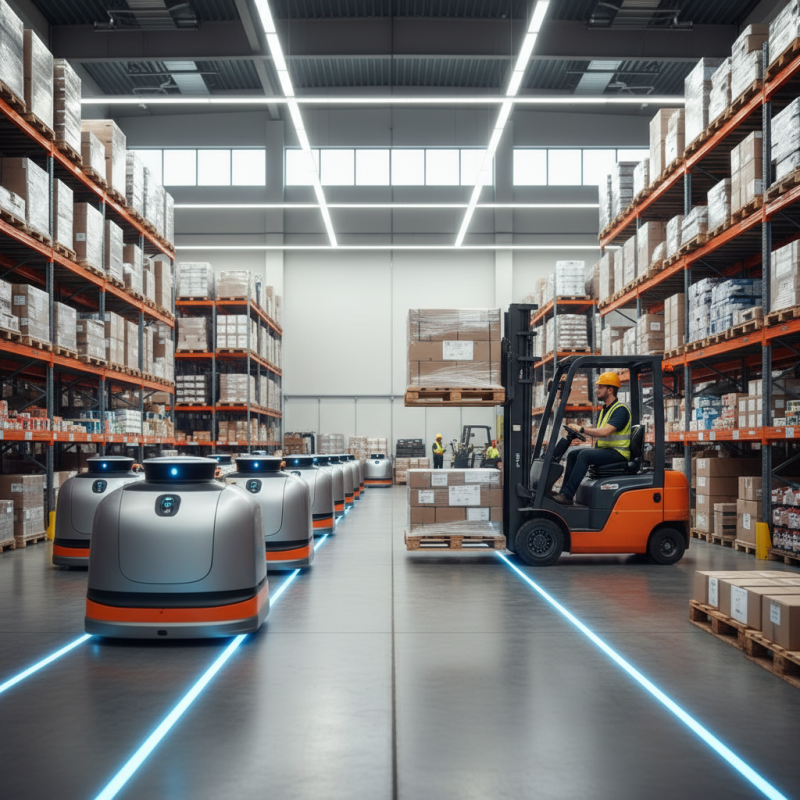
When comparing Automated Guided Vehicles (AGVs) and manual forklifts, several key differences emerge. AGVs operate autonomously. They follow predetermined pathways, minimizing human error. In contrast, manual forklifts rely heavily on human operators, increasing potential for accidents. Additionally, AGVs can handle repetitive tasks, providing consistency. Manual forklifts may struggle in high-volume operations.
Tips: Evaluate your workload. If you have a predictable inventory flow, AGVs may be the answer. Another consideration is space. AGVs can navigate tighter spaces, which is an advantage in smaller warehouses.
AGVs typically require less maintenance than manual forklifts. However, they need a reliable infrastructure for operation, like guiding systems. Manual forklifts, while versatile, can lead to higher labor costs over time. It's essential to assess your workforce capabilities and the potential for increasing operational efficiency. Reflect on these strengths and weaknesses carefully. The choice between AGVs and manual forklifts hinges on your business's unique needs and goals.
When considering material handling solutions, understanding your business needs is critical.
Automated Guided Vehicles (AGVs) can optimize operations significantly. Evaluate the volume and type of goods handled in your facility. AGVs excel in
transporting large loads efficiently, reducing labor costs and increasing safety. Manual forklifts may be
preferable for flexibility in smaller spaces.
Tips for assessment: Analyze your layout and workflow. Are there bottlenecks in your current operation?
A crowded workspace may benefit from AGVs that operate in designated paths without human intervention. Keep in mind the
training required for your employees to manage these technologies. Adopting AGVs demands a shift in mindset
and operations.
Another consideration is maintenance. AGVs require regular upkeep, which can be a new challenge for some businesses. Compare this with the occasional repairs of
manual forklifts. Cost-analysis is essential. Ensure that moving to automation aligns with your budget.
Being mindful of your company's unique demands will guide the decision-making process effectively.
When evaluating the cost-benefit analysis of Automated Guided Vehicles (AGVs) versus manual forklifts, it’s essential to consider several key factors. AGVs offer improved efficiency by automating the material handling process. They can operate continuously without breaks, increasing productivity. In contrast, manual forklifts require operators, leading to increased labor costs and potential downtime.
Investing in AGVs may seem expensive upfront, but long-term savings can be significant. They reduce labor costs and minimize workplace accidents. This results in fewer insurance claims and lower compensation costs. However, AGVs are not a one-size-fits-all solution. Depending on your operational requirements, manual forklifts may still be beneficial in certain scenarios.
Tips for evaluating your options:
- Calculate the total costs of ownership for both AGVs and manual forklifts, including maintenance.
- Assess your workspace layout. AGVs may need modifications for optimal efficiency.
- Think about your workforce. Are there sufficient trained staff for manual operations?
Choosing the right equipment involves more than just numbers. Consider your unique business needs and future growth plans. Balancing automation with human expertise could yield the best results.
When considering automated guided vehicles (AGVs), it's crucial to focus on their key features and technology. One significant aspect is the sensor technology integrated into AGVs. These sensors enable real-time navigation, obstacle detection, and path planning. According to recent industry reports, companies that utilize sensor-equipped AGVs report a 30% increase in operational efficiency. This efficiency stems from reduced downtime and better space utilization in warehouses.
Another important feature is the scalability of AGVs. Many systems can adapt to a business’s needs. For instance, organizations can start with a few units and expand as demand grows. Experts indicate that 70% of logistics managers plan to implement more AGVs within the next five years. However, there is a common challenge—integrating AGVs with existing infrastructure. This integration requires planning and investment but can yield significant long-term benefits.
Battery life and charging technologies are also essential considerations. Advanced AGVs use lithium-ion batteries, which recharge faster and last longer than traditional batteries. Data shows that these AGVs can operate for up to 16 hours on a single charge. Yet, inadequate charging infrastructure can hinder operational flow. It's essential for businesses to evaluate their facilities before transitioning to AGVs.
| Feature | Automated Guided Vehicles (AGVs) | Manual Forklifts |
|---|---|---|
| Efficiency | High, operates continuously without breaks | Dependent on operator efficiency and breaks |
| Cost of Operation | Lower long-term due to reduced labor costs | Higher due to labor costs and potential training |
| Safety | Enhanced with sensors and programmed protocols | Higher risk of accidents due to human error |
| Flexibility | Highly adaptable to various tasks and environments | Limited by operator skills and capabilities |
| Maintenance | Regular software updates; hardware typically more durable | Requires frequent maintenance due to wear and tear |
| Technology Integration | Easily integrates with warehouse management systems | Limited integration capabilities |
Transitioning from manual forklifts to Automated Guided Vehicles (AGVs) can significantly enhance operations. This shift requires careful planning and execution. Start by assessing your current workflow. Identify bottlenecks and areas where AGVs could improve efficiency. This analysis provides a clear picture of your needs.
Training your team is crucial during this transition. Employees must understand AGV operations. Begin by integrating AGVs into daily tasks. Monitor how your staff adapts to this technology. Gather their feedback for improvement.
Tips: Consider a phased implementation. Introduce AGVs in one area before expanding. This approach lessens disruption and allows for adjustments based on real-time observations. Regular training sessions can maintain skill levels as technology evolves.
Evaluate the integration continuously. Track performance metrics to ensure AGVs meet your efficiency goals. Be open to refining processes based on data. Many businesses find AGVs require a different operational mindset, which may take time to develop. Adjust your strategies accordingly.
utomated Guided Vehicles (AGVs)?
Manual forklifts depend on human operators, which can lead to accidents and inefficiencies in high-volume operations.
Consider your workload and whether you have a predictable inventory flow that AGVs can handle effectively.
Yes, AGVs are designed to navigate tighter spaces, making them suitable for smaller warehouses.
AGVs generally require less maintenance but need reliable infrastructure, like guiding systems, for optimal operation.
Sensor technology in AGVs allows for real-time navigation, leading to increased operational efficiency and reduced downtime.
Integrating AGVs with existing infrastructure can be complex and requires careful planning and investment.
Advanced batteries, like lithium-ion, enable longer operation times and quicker recharges, essential for maintaining workflow.
Assessing your workforce's skills is crucial, as AGVs may demand different operational strategies and training.
Yes, consider the potential challenges, like integration and maintenance, before making the transition to AGVs.
In today's competitive business environment, understanding the differences between Automated Guided Vehicles (AGVs) and manual forklifts is essential for optimizing material handling. Businesses must assess their specific needs, including efficiency, safety, and operational cost, to determine "Why use an AGV instead of a manual forklift." AGVs offer several advantages, including reduced labor costs, improved safety, and increased accuracy in material transport.
Evaluating the cost-benefit analysis is crucial, as the initial investment in AGVs may be offset by long-term savings and productivity gains. Key features and technology in AGVs, such as navigation systems and load capacities, should align with business requirements. Ultimately, transitioning from manual forklifts to AGVs involves careful planning and implementation, ensuring that organizations fully leverage the benefits of automation while enhancing their material handling processes.

AJ Forklifts