Choosing the right forklift for a warehouse is crucial for efficiency and safety. According to John Smith, a noted expert in warehouse logistics, "The right forklift can transform how operations run." His insight highlights the significance of this decision.
When considering how to choose the right forklift for a warehouse, various factors come into play. Forklift capacity, type, and environment are essential. A narrow-aisle forklift might be perfect for compact spaces. Conversely, a larger model may be necessary for heavier loads. Understanding these nuances is vital.
Moreover, potential buyers often overlook long-term costs. Maintenance, fuel consumption, and training for operators matter greatly. These elements can affect overall efficiency and budget. Reflecting on these aspects can prevent costly mistakes later. Hence, making an informed choice is not just smart—it's necessary.
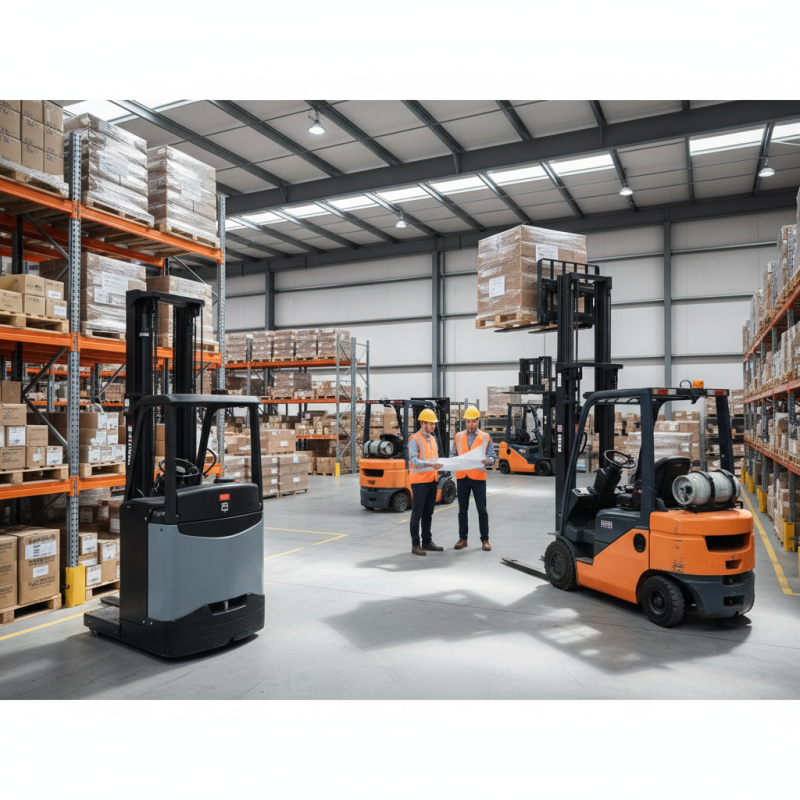
When selecting a forklift for your warehouse, understanding the various types available is crucial. Electric forklifts are popular for indoor use. They produce zero emissions and operate quietly. According to industry reports, about 60% of warehouses prefer electric models for their efficiency. However, they may struggle on uneven surfaces.
Internal combustion forklifts, powered by gas or diesel, excel in outdoor environments. They have more power and can lift heavier loads. Statistics reveal that 80% of businesses that require heavy lifting choose internal combustion models. Despite their advantages, these forklifts produce emissions, which complicates their use indoors.
Recognizing your operational needs is essential. Consider the size and layout of your warehouse. Some forklifts have limited maneuverability. Others can operate in narrow aisles or tight spaces. Insufficient training of operators can lead to accidents. This reflects the importance of selecting the right type and ensuring proper training to maximize safety and efficiency.
| Forklift Type | Load Capacity (lbs) | Max Lift Height (ft) | Power Source | Best Use |
|---|---|---|---|---|
| Electric Forklift | 3,000 - 5,000 | 10 - 20 | Battery | Indoor Use |
| Internal Combustion Forklift | 5,000 - 15,000 | 10 - 15 | Gas/Diesel | Outdoor Use |
| Reach Truck | 3,000 - 5,500 | 20 - 40 | Battery | Narrow Aisles |
| Pallet Jack | 3,000 - 5,000 | No Lift | Manual/Electric | Moving Pallets |
| Order Picker | 3,000 - 5,000 | 10 - 30 | Battery | Order Picking |
When choosing the best forklift for your warehouse, consider key factors that affect performance. Start with the capacity you need. Assess the weight of the loads you will be moving regularly. A forklift that’s too weak will increase risks and slow down operations.
Next, think about the warehouse layout. Narrow aisle forklifts are great for tight spaces, while larger models suit open areas. Measure your aisles and doorways to ensure a proper fit.
Tip: Always test drive a forklift before committing. This helps you feel the machine's controls and visibility. It’s easy to think a machine will fit well, but reality can differ. Don't overlook battery life, especially if you use electric models. Short runs can lead to downtime. Make sure the model you choose aligns with your typical workload and hours of operation.
Don’t rush this decision. Review the maintenance requirements too. Some forklifts demand more care than others. Consider the long-term costs versus the immediate purchase price. A cheaper option may not be the most efficient choice for your needs.
When selecting a forklift, assessing your warehouse space is crucial. The layout determines the type of forklift that will function efficiently. Narrow aisles require smaller, more agile models. Open spaces can accommodate larger forklifts. Understanding your space can prevent costly mistakes.
**Tip:** Measure your aisles. Know the width and height restrictions. This data helps you choose a forklift that fits without compromising safety.
Don't forget to consider the torque of the machines as well. Some forklifts may not turn well in tight spots. This can slow down operations significantly. Always visualize how a forklift will maneuver through your warehouse.
**Tip:** Evaluate your shelf height. High racks need forklifts with the right lifting capacity. Choosing the wrong model might lead to accidents or damages.
Also, think about the weight you need to lift. Each forklift has a limit that shouldn't be exceeded. Understanding your daily tasks can lead to better forklift choices. Reflect on the space and tasks. It’s vital for efficiency in your operations.
When selecting a forklift for your warehouse, evaluating load capacity is crucial. This ensures your equipment can handle the products you need to move. Start by calculating the maximum weight of your heaviest loads. Consider factors like pallet size and stacking height. A forklift must support these weights safely.
Don't forget about weight distribution. Unevenly loaded pallets can pose risks. Forklift stability relies on proper load placement. This may require additional training for your staff. Ensure they understand safe practices for loading and unloading. Think about the layout of your warehouse, too. Narrow aisles can limit the type of forklifts that can operate efficiently.
Regularly reassess your weight requirements as inventory changes. New products may have different specifications. Flexibility in your forklift choice is important. Demand can fluctuate. A forklift that seemed adequate last year may no longer fit your needs. Continuous evaluation helps in avoiding costly mistakes.
When selecting a forklift for warehouse operations, cost, maintenance, and safety are critical aspects. According to a report from the Material Handling Industry of America, forklifts can cost from $15,000 to over $100,000, depending on type and specifications. Businesses must evaluate not just the upfront cost but also long-term operational expenses, including fuel efficiency and potential repair costs. A poorly chosen model can lead to escalated financial burdens over time.
Maintenance is another significant factor. Regular upkeep can reduce breakdowns and improve lifespan. The Occupational Safety and Health Administration (OSHA) emphasizes that proper maintenance helps prevent accidents. Approximately 85% of forklift incidents are due to operator errors or equipment failure. Neglecting maintenance can result in dangerous conditions. It's essential to choose models that offer easy access to parts and service tools.
Safety features play a vital role in protecting employees. Integrated technologies, like tilt sensors and warning alarms, are essential. Studies show that warehouses with advanced safety measures reduce accident rates by up to 30%. However, not all forklifts come standard with these efficiencies. A wish for better safety features can often collide with budget constraints, emphasizing the need to balance cost with essential safety options.
: Electric forklifts are popular for indoor use. They produce zero emissions and operate quietly.
About 60% of warehouses choose electric models for their efficiency.
They excel outdoors with more power and can lift heavier loads.
Statistics show that 80% of such businesses prefer internal combustion models.
The layout affects forklift choice. Narrow aisle models fit tight spaces better.
Insufficient training can lead to accidents. Proper training improves safety and efficiency.
Always test drive forklifts. It helps assess controls and visibility.
Short battery life can lead to downtime. Make sure it aligns with your workload.
No, take your time. Reviewing maintenance and long-term costs is crucial.
A low purchase price may come with higher long-term costs and inefficiency.
Choosing the right forklift for a warehouse is essential for optimizing operations and ensuring safety. To make an informed decision, it’s important to understand the various types of forklifts available, as each is designed for specific tasks and environments. Key factors to consider include the operational tasks required, the dimensions of the warehouse, and the compatibility of the forklift with the available space and layout.
Additionally, evaluating load capacity and weight requirements is crucial to ensure that the selected forklift can handle the anticipated loads effectively. It is also beneficial to analyze costs, maintenance needs, and safety features that come with each forklift model. By addressing these elements, warehouse managers can successfully determine how to choose the right forklift for a warehouse, enhancing productivity while maintaining a safe working environment.

AJ Forklifts