In the quest for efficient material handling, the debate persists: "Which is better lithium-ion or lead-acid forklift batteries?" Industry expert Dr. Lisa Marzano, a recognized authority in battery technology, states, "The choice between lithium-ion and lead-acid depends on operational needs and budget constraints."
Choosing between these two battery types involves critical considerations. Lithium-ion batteries offer faster charging times and longer lifespans, making them increasingly popular in modern warehouse settings. In contrast, lead-acid batteries are traditionally viewed as more economical due to their lower upfront costs. However, their heavier weight and shorter cycle lives raise questions about overall efficiency.
It's essential to evaluate specific operational requirements. For instance, frequent charging cycles may favor lithium-ion, while budget-restricted operations might lean toward lead-acid. Ultimately, both battery types have their unique advantages and shortcomings, challenging businesses to reflect on what truly suits their needs. This comparison is not merely technical; it’s about aligning battery performance with operational goals.
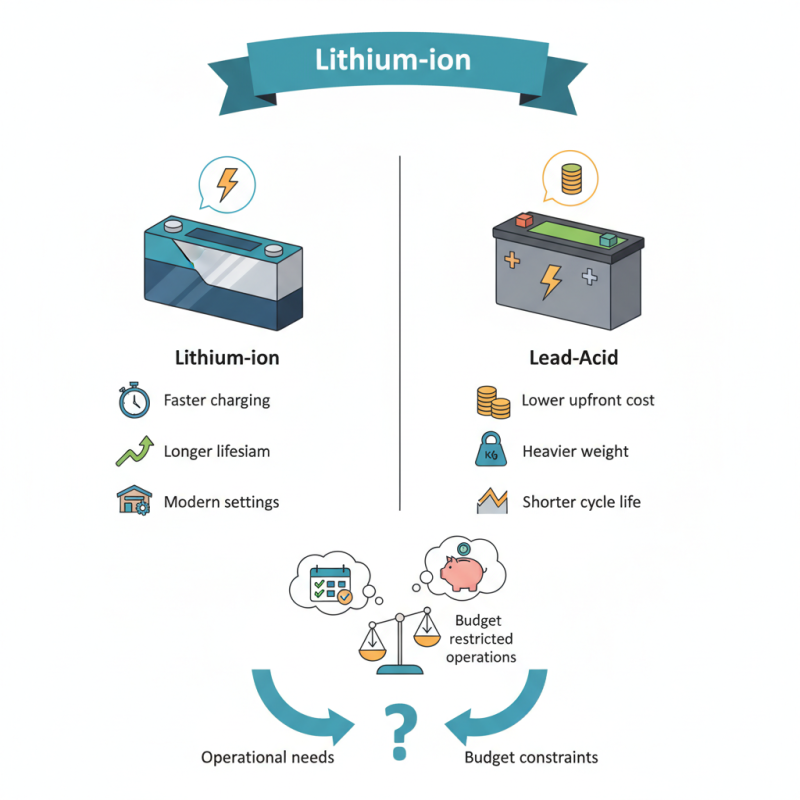
Comparison Overview of Lithium Ion and Lead Acid Forklift Batteries
When analyzing forklift battery options, lithium-ion and lead-acid batteries are at the forefront. Lithium-ion batteries offer significant advantages in terms of efficiency and lifespan. According to industry reports, lithium-ion batteries can last up to three times longer than traditional lead-acid batteries. They also provide quick charging capabilities, reducing downtime during operations.
Lead-acid batteries generally require more maintenance and have lower energy density. They can take several hours to charge and often need replacement every few years. A study by the Battery Research Institute indicated that operational costs can be higher with lead-acid due to frequent replacements. These factors can impact overall productivity and budget efficiency.
Tip: Consider battery management systems for lithium-ion batteries to enhance their lifespan and performance. Proper management can prevent overheating and maximize charging efficiency.
Ultimately, each battery type has its trade-offs. Lithium-ion batteries may be the more advanced choice, yet they come with a higher initial investment. Evaluate your operational needs and budget before deciding.
Tip: Regular maintenance of lead-acid batteries is essential. Overlooking it can lead to reduced performance and increased costs down the line.
Key Characteristics of Lithium Ion Forklift Batteries
Lithium-ion forklift batteries are revolutionizing warehouse operations. They offer a higher energy density compared to lead-acid batteries. This means they can store more energy in a smaller space. The charging time is also significantly reduced. Many lithium-ion batteries can charge up to 80% in just one hour. This leads to less downtime during busy shifts.
Another key feature is their lifespan. Lithium-ion batteries often last up to five times longer than lead-acid ones. This results in lower replacement costs over time. Additionally, they perform better in extreme temperatures. They can retain their efficiency even in cold or hot environments. However, initial costs can be a concern for some businesses.
Maintenance requirements also differ. Lithium-ion batteries are generally maintenance-free. In contrast, lead-acid batteries need regular watering and monitoring. This can add to the overall operational burden. Businesses should weigh these factors carefully. Understanding the pros and cons of each battery type is essential for making informed decisions.
Key Characteristics of Lead Acid Forklift Batteries
Lead-acid forklift batteries have long been a staple in warehouse operations. They are reliable and cost-effective for material handling tasks. These batteries are known for their simplicity and robust design, making them easy to maintain. A lead-acid battery typically requires regular watering and cleaning to ensure optimal performance. The technology is well-established and widely understood by many technicians.
One key characteristic of lead-acid batteries is their weight. Due to the density of lead, these batteries can be quite heavy, providing stability to forklifts during operation. However, this weight can be a disadvantage in some scenarios, as it affects maneuverability. Another notable feature is their discharge rate. Lead-acid batteries can handle deep discharges well, but repeated deep discharging can shorten their lifespan significantly.
While lead-acid batteries are popular, they come with certain limitations. Charging times can be significant, often taking several hours. This can lead to downtime in operations. Additionally, lead-acid batteries tend to have a shorter overall lifespan compared to newer technologies. Regular maintenance and awareness of potential issues are critical for safety and performance. This reflects the need for a careful balance between cost and efficiency in battery selection.
Cost Analysis and Economic Considerations for Both Battery Types
When evaluating lithium-ion and lead-acid batteries for forklifts, it's crucial to consider the economic implications. Lithium-ion batteries, while more expensive upfront, generally offer lower total cost of ownership over time. For instance, industry reports indicate that lithium-ion batteries can last up to 10 years with proper maintenance, compared to the 3-5 years lifespan of lead-acid batteries.
In terms of operational costs, lithium-ion batteries charge faster and require less maintenance. According to research from battery analysts, this can lead to a reduction in downtime of around 30%. However, the initial investment in lithium-ion technology is significant. It is important to weigh these factors against your specific operational needs and budget constraints.
Lead-acid batteries tend to be more affordable initially, making them attractive for companies with limited budgets. But they incur higher maintenance costs and have more stringent charging requirements. As operational demands increase, these costs can accumulate rapidly. Understanding the nuances of both options is vital for making an informed decision that aligns with both economic and operational goals.
Performance Efficiency: Lifespan, Charging Time, and Energy Density
When comparing lithium-ion and lead-acid forklift batteries, performance efficiency is crucial. Lifespan is a significant factor. Lithium-ion batteries typically last longer, with a lifespan of 5 to 10 years. Lead-acid batteries may only provide 3 to 5 years of service before needing replacement.
Charging time is another essential aspect. Lithium-ion batteries charge faster, often reaching full capacity in just 1 to 2 hours. In contrast, lead-acid batteries can take 6 to 8 hours for a complete charge. This difference greatly affects operational efficiency.
Energy density also plays a pivotal role in the comparison. Lithium-ion batteries have a higher energy density, meaning they can store more energy in a smaller size. This leads to lighter forklift designs and greater maneuverability. However, the upfront cost of lithium-ion batteries can be a drawback.
Tips: Consider your specific operational needs when choosing a battery type. Evaluate your charging infrastructure. Sometimes, investing in a lithium-ion system is worth the efficiency gained. Reflect on your total cost of ownership, not just purchase price. Selecting the right battery type can enhance overall productivity significantly.
2026 Top Comparison: Lithium Ion vs Lead Acid Forklift Batteries
FAQS
: They have higher energy density, longer lifespan, and reduced charging time. This leads to less downtime.
They can last between 5 to 10 years. This is longer compared to lead-acid batteries.
Many can reach 80% charge in just one hour. This is much quicker than lead-acid batteries.
They are generally maintenance-free. Lead-acid batteries require regular watering and monitoring.
Yes, they have a higher upfront cost. However, they offer lower total ownership costs over time.
Lithium-ion batteries charge faster and require less maintenance, reducing operational costs.
Yes, they maintain efficiency in both hot and cold environments. This is a significant advantage.
The initial investment is higher, which can be concerning for budget-limited companies.
They should assess specific operational needs and total cost of ownership, not just purchase price.
Charging can take 6 to 8 hours for lead-acid batteries, which affects overall efficiency.
Conclusion
The comparison between lithium-ion and lead-acid forklift batteries reveals key insights into their characteristics, costs, and performance efficiencies. Lithium-ion batteries are known for their longer lifespan, faster charging times, and higher energy density, making them a popular choice for many modern warehouses. In contrast, lead-acid batteries are often more affordable upfront but may require more frequent replacement and maintenance.
When considering "which is better: lithium-ion or lead-acid forklift batteries," businesses must weigh factors such as initial costs, longevity, and operational efficiency. While lithium-ion options can present a higher initial investment, their efficiency and reduced downtime can lead to significant cost savings over time. Ultimately, the decision will depend on each operation's specific needs and financial considerations.

 AJ Forklifts