When considering the purchase of a standard stacker, one of the key inquiries is, "What is the maximum lifting height for a standard stacker?" Understanding this aspect is crucial for optimizing warehouse operations. The lifting height directly impacts efficiency and safety in material handling. Various models offer different heights, catering to diverse industrial needs.
Lifting heights can range from moderate to substantial. Some stackers exhibit maximum heights reaching over 3 meters, while others remain below this threshold. Make sure to choose a stacker that aligns with your operational requirements. It's essential to consider both the current and future needs of your workspace.
Yet, it’s important to note that the height isn't the only consideration. Overlooking the weight capacity or stability while lifting could lead to accidents. Evaluating all specifications collectively ensures a reliable investment. Recognizing these factors can help avoid pitfalls in your handling processes. Balancing height with other functional aspects is key to making an informed choice for your stacker needs.
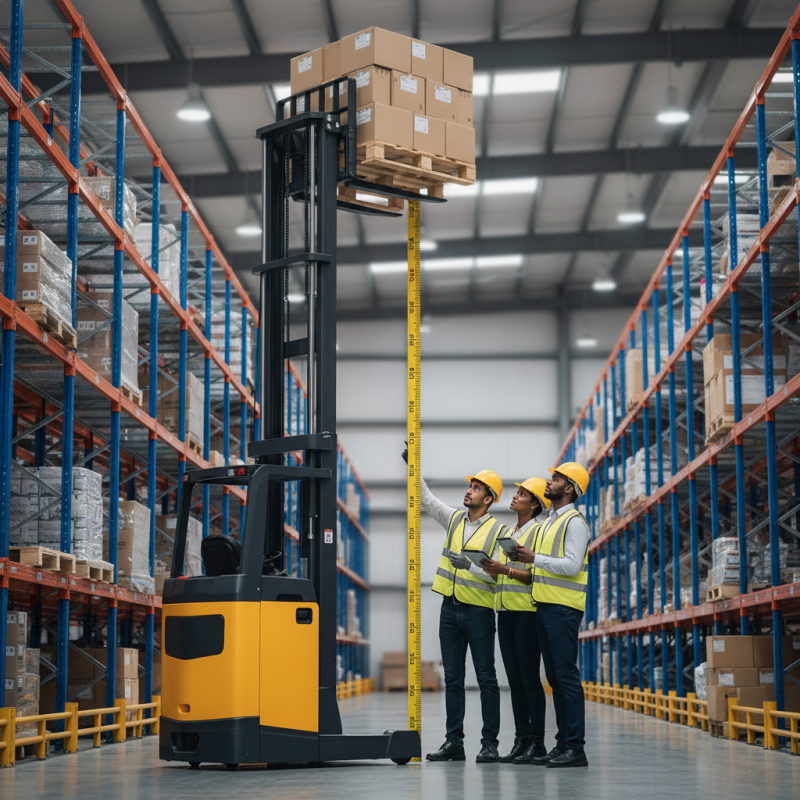
When discussing the 2026 Standard Stacker, one crucial aspect is its maximum lifting height. This specification greatly affects its usability in various settings. For warehouse operations, the lifting height directly influences how efficiently goods can be stacked or retrieved. The right height can save time and increase safety during operations.
The 2026 Standard Stacker typically offers a maximum lift of around 3000 mm. This height is beneficial for reaching higher shelves without the need for ladders or additional equipment. However, operators must consider the stacker's overall stability at such heights. Maneuverability can become an issue, especially in tighter spaces. Operators might find it challenging to navigate while ensuring optimal safety.
It's essential to reflect on your specific needs before choosing a stacker. Consider the average load weight and height requirements in your warehouse. Inspecting the stacker’s features and understanding its limits will help in making an informed decision. Each setting differs, and while some may favor height, others prioritize stability and comfort. Finding the right balance is key to operational efficiency.
Maximum lifting height is crucial for standard stackers in various industries. Several key factors determine this height, impacting efficiency and safety. The design of the stacker plays a significant role. A higher mast allows for greater lifting but can introduce stability issues. According to industry reports, stackers with masts exceeding 5 meters require specific safety features to prevent tipping.
Load capacity is another influential factor. A stacker's ability to lift various weights affects its maximum height. For instance, stackers rated for 1,000 kg may have a lower lifting height compared to those rated for 600 kg. This highlights a trade-off in design—balancing load capacity with height.
Terrain and operational environment are equally important. Stackers operating on uneven surfaces may not achieve their maximum height safely. According to logistics studies, 30% of stacker accidents occur due to improper terrain assessments. Users must regularly check conditions to ensure safety and efficiency.
The 2026 market offers a variety of standard stackers, each with unique maximum lifting heights. A higher lifting height often means improved efficiency in warehouse operations. Some models can reach impressive heights of over three meters, making them suitable for taller storage solutions. It’s important to consider the height in relation to your specific storage needs.
When comparing top models, weight capacity also plays a crucial role. Higher lifting capacities may lead to stability issues if not properly balanced. Users have noted that while some stackers excel in height, they may lack in maneuverability. This trade-off can affect workflow in tight spaces.
Height is just one factor to consider. Safety features and ease of use are equally important. A model with a high lifting height might be intimidating for inexperienced operators. Understanding these nuances can prevent accidents and optimize performance. Consider factors beyond just numbers to ensure the best fit for your operation.
When discussing stackers, safety standards are paramount. Regulations dictate maximum lifting heights to minimize accidents. These standards ensure operators are protected and that equipment is reliable. A stacker that exceeds safety limits can pose serious risks.
It's essential to train employees on safe operation practices. Each employee should know the correct lifting techniques. This not only enhances safety but also improves efficiency. Regular inspections of the stacker can reveal potential issues early, avoiding costly accidents.
Consider the environment where the stacker operates. Uneven surfaces can affect stability. Moreover, weather conditions can also play a role in lifting safety. Be mindful of these factors and adjust your practices accordingly. Always prioritize safety to promote a culture of awareness and prevention.
Innovations in stacker technology are changing lifting capacities across industries. Recent reports show that new models can reach heights up to 6 meters. This is a significant increase from just a few years ago. The use of advanced materials is enhancing both strength and weight efficiency. Lighter stackers mean less energy consumption during operation.
Battery technology also plays a key role. Lithium-ion batteries now provide longer operational times, facilitating extended working hours. According to industry forecasts, the demand for stackers with higher lifting heights is expected to grow by 15% annually. However, some organizations face challenges in integrating these new technologies effectively and safely. Worker training becomes crucial as handling becomes complex with greater heights.
Moreover, the focus on safety innovations cannot be overlooked. Companies are investing in stability features to prevent accidents. Yet, some operators still struggle with the transition, citing difficulties in adapting to these advancements. The learning curve can lead to performance issues temporarily. Continuous improvement and feedback loops are essential for overcoming these barriers.
| Model | Maximum Lifting Height (mm) | Load Capacity (kg) | Weight (kg) | Features |
|---|---|---|---|---|
| Standard Stacker A | 3000 | 1500 | 450 | Ergonomic Handles, Adjustable Forks |
| Standard Stacker B | 2500 | 1200 | 400 | Compact Design, Easy Maneuverability |
| Standard Stacker C | 3200 | 1700 | 470 | Intelligent Control System, High Stability |
| Standard Stacker D | 2800 | 1300 | 430 | Quick Lift Function, Heavy Duty |
: Key factors include design, load capacity, and terrain. Each affects efficiency and safety.
A taller mast allows greater lifting but may lead to stability issues, especially with heights over 5 meters.
Yes, stackers rated for heavier loads may not lift as high as those rated for lighter weights.
Stackers on uneven surfaces may not achieve maximum height safely, risking accidents in operations.
Studies indicate that 30% of these accidents stem from improper assessments of terrain conditions.
Higher stackers can better serve taller storage needs, enhancing warehouse efficiency.
Yes, higher capacities can lead to instability, especially if the stacker is not properly balanced.
They help prevent tipping and accidents, especially for inexperienced operators handling taller models.
Users must consider safety features, ease of use, and maneuverability for effective and safe operations.
Users may sacrifice maneuverability for height, which can impact workflow in confined spaces.
The article "2026 Best Standard Stacker Maximum Lifting Height Explained" provides an in-depth look at the specifications and characteristics influencing the maximum lifting height of standard stackers. Central to the discussion is the question, "What is the maximum lifting height for a standard stacker," which varies depending on the model and design. Key factors such as the stacker's construction, hydraulic system efficiency, and load capacity play a significant role in determining this height.
Furthermore, the article includes a comparative analysis of leading stacker models for 2026, highlighting notable differences in their lifting capabilities. It also examines the impact of safety standards and regulations on lifting heights, ensuring that stackers meet industry requirements. Innovations within the industry are discussed, showcasing how advancements in technology are enhancing lifting capacities and efficiency, ultimately influencing the maximum height achievable by modern stackers.

AJ Forklifts